

Key Takeaways
Macerata’s borghi reward unhurried visits: each has its own pace, outlook and reason to linger. Use these ideas to shape a route that suits you.
- Cingoli pairs hilltop lanes with wide countryside views.
- Sarnano and Visso bring the Sibillini Mountains close.
- San Ginesio, Treia and Montecassiano invite slow walks through historic centres.
- Recanati’s streets connect literary heritage with open views.
- Pioraco, Matelica and Camerino add riverside, vineyard and university-town character.
1. Cingoli: the balcony of the Marche
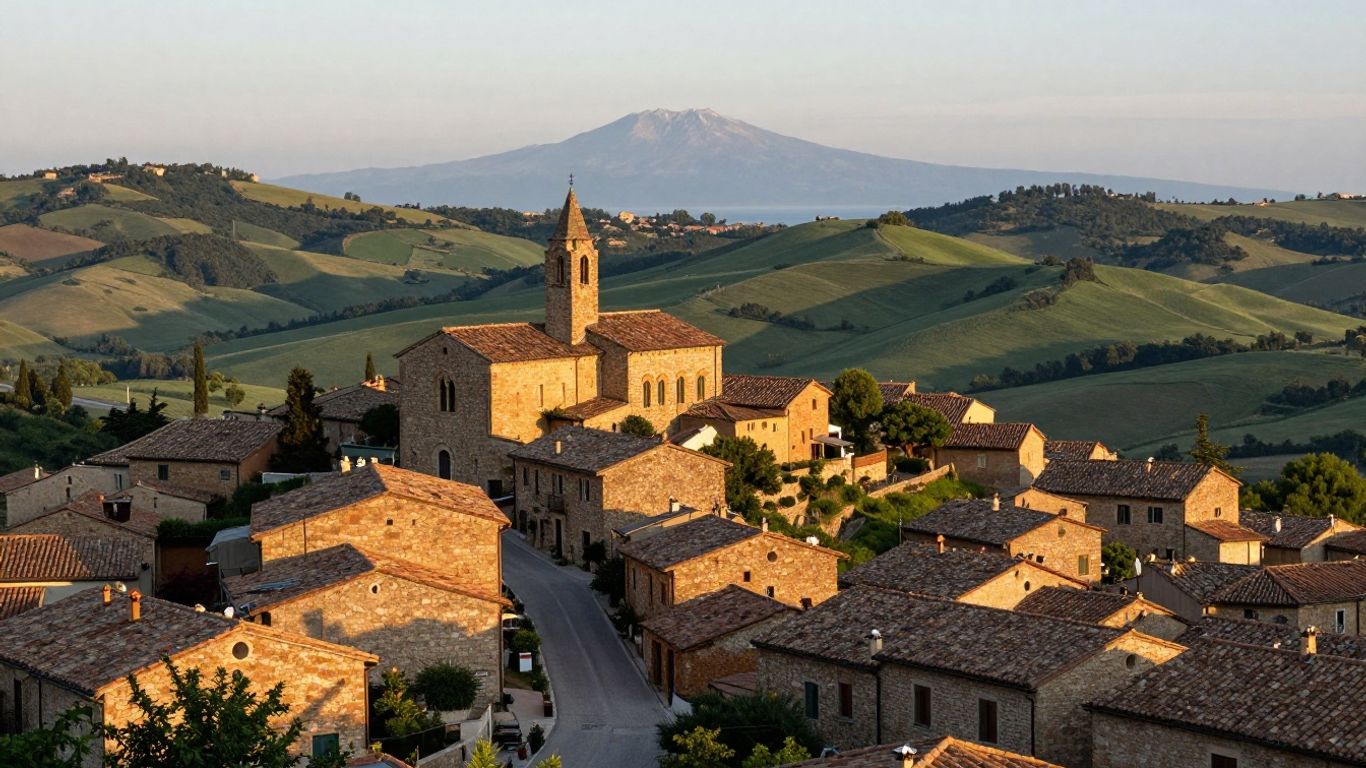
Cingoli’s elevated position gives the town its familiar balcony-like outlook across the Marche, with views that can reach towards the Adriatic. Come for the prospect, but leave time for the historic centre too: its lanes and old buildings make the visit more than a quick photo stop.
A few distinct settings help you decide how to spend your time. The town centre is a good place to begin, while the surrounding landscape offers a different kind of pause.
| Place | What to look for |
|---|---|
| Historic centre | Lanes and old buildings |
| Viewpoints | Open countryside and distant horizons |
| Lago di Cingoli | A quieter change of scenery |
If you’re sketching out a wider trip, a flexible Macerata day-trip route can help you pair hill towns with other regional landscapes. Cingoli works especially well when you want a compact historic visit alongside a generous view. For more on the town, read Cingoli’s village profile.
2. Sarnano: medieval streets beneath the Sibillini Mountains
Sarnano brings you from the soft lines of the hills into the stronger presence of the Sibillini. Its medieval streets are a pleasure to explore at walking pace; allow yourself to turn down side lanes rather than following only the most direct route through the centre.
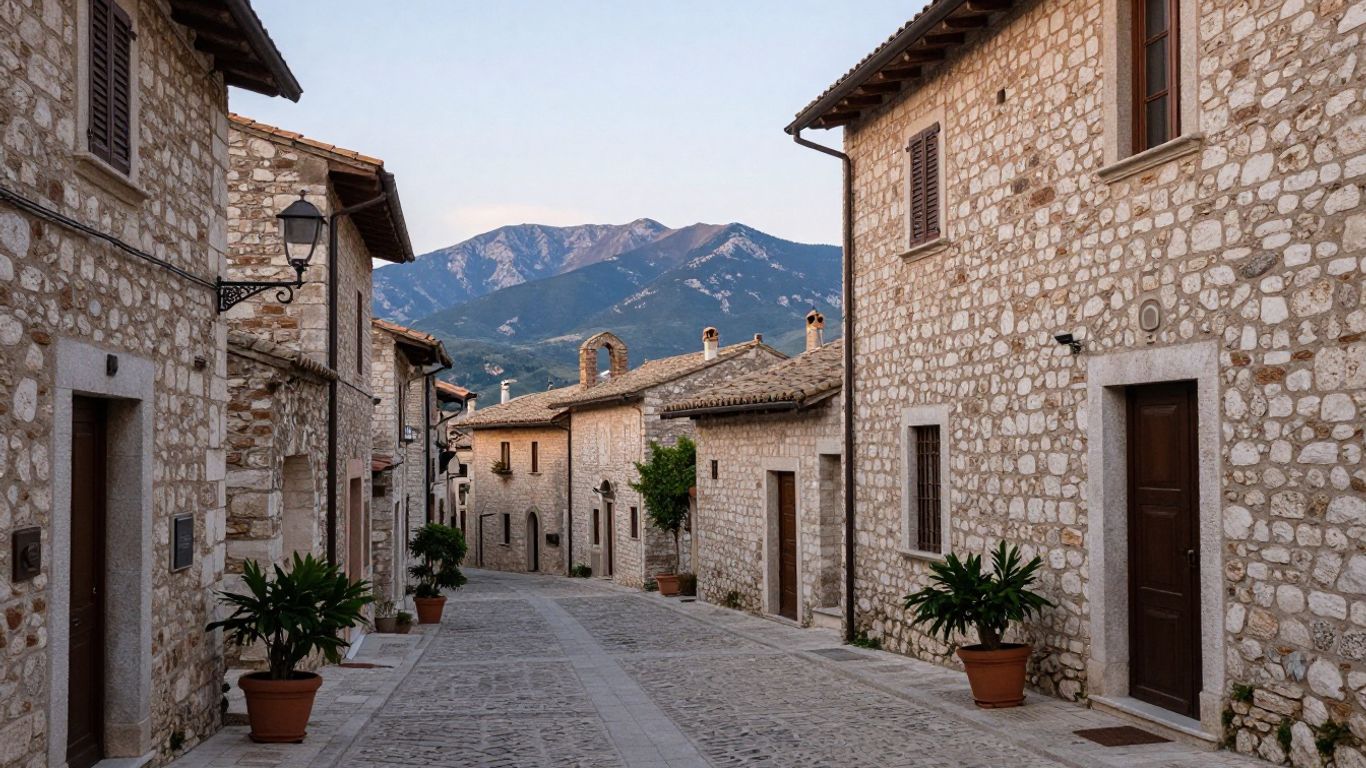
The town suits a day when you want both an old centre and a mountain backdrop. A simple visit might unfold in a few unhurried stages:
- Walk the historic lanes and pause in the centre.
- Take time to look back towards the surrounding mountains.
- Choose a nearby scenic stop if you have more of the day.
That mix makes Sarnano a natural fit for a wider Sibillini itinerary. Sileni Hills, a retreat in Petriolo opening in June 2027, is intended as a base for exploring the Marche, including its mountain landscapes. Keep your plans flexible, since the appeal here is as much the wandering as the checklist.
3. San Ginesio: historic charm and mountain views
San Ginesio offers a quieter sort of hill-town visit, where the pleasure lies in the texture of the streets and the views beyond them. Set aside time to walk without rushing: small architectural details can be easy to miss when you move straight from one landmark to another.
The surrounding countryside gives the town a strong sense of place. On a clear day, take a moment to look out towards the mountains and let the contrast between built stone and open landscape shape the pause. It’s a good stop to balance a busier day of driving.
You can pair San Ginesio with another borgo rather than trying to fit too many sights into a single visit. A coffee or a slow lunch helps the day feel less like a route to complete and more like time spent in the Marche. Bring comfortable shoes for the uneven streets.
4. Treia: elegant piazzas and a striking city wall
Treia’s historic centre feels composed around its piazzas, while the town walls give its outline a distinctive presence. Start with a walk through the centre, then follow the edge of the old town to appreciate how the buildings sit within the hilltop setting.
The town’s history is not confined to stonework. Treia is associated with the traditional game of pallone col bracciale, and the old playing tradition adds a lively thread to an otherwise measured visit. It’s a detail worth keeping in mind as you explore.
Give the piazzas time to work their quiet charm. You might stop for a drink, watch the rhythm of the day and then take a second look at the walls. Treia pairs well with nearby towns when you want a varied itinerary without making every stop feel like a major excursion.
5. Montecassiano: a compact medieval centre
Montecassiano is a useful choice when you want a smaller-scale visit. Its medieval centre is compact enough to explore on foot, so you can leave the car behind for a while and take the lanes at an easy pace.
Look for the way the streets gather around the historic heart of the town. The experience is less about covering a long list of attractions and more about noticing the close-set buildings, the changing views between lanes and the sense of a place shaped for everyday life.
Because it is a compact stop, Montecassiano can fit neatly into a day with another destination. You don’t need to hurry through it, though; a short walk followed by a pause in the centre often makes for a more satisfying visit than trying to add one more town to the schedule.
6. Recanati: hilltop lanes and literary heritage
Recanati combines hilltop views with the story of poet Giacomo Leopardi, giving you two good reasons to explore on foot. The historic centre rewards a relaxed wander, while Leopardi-related places add context to the town’s literary reputation.
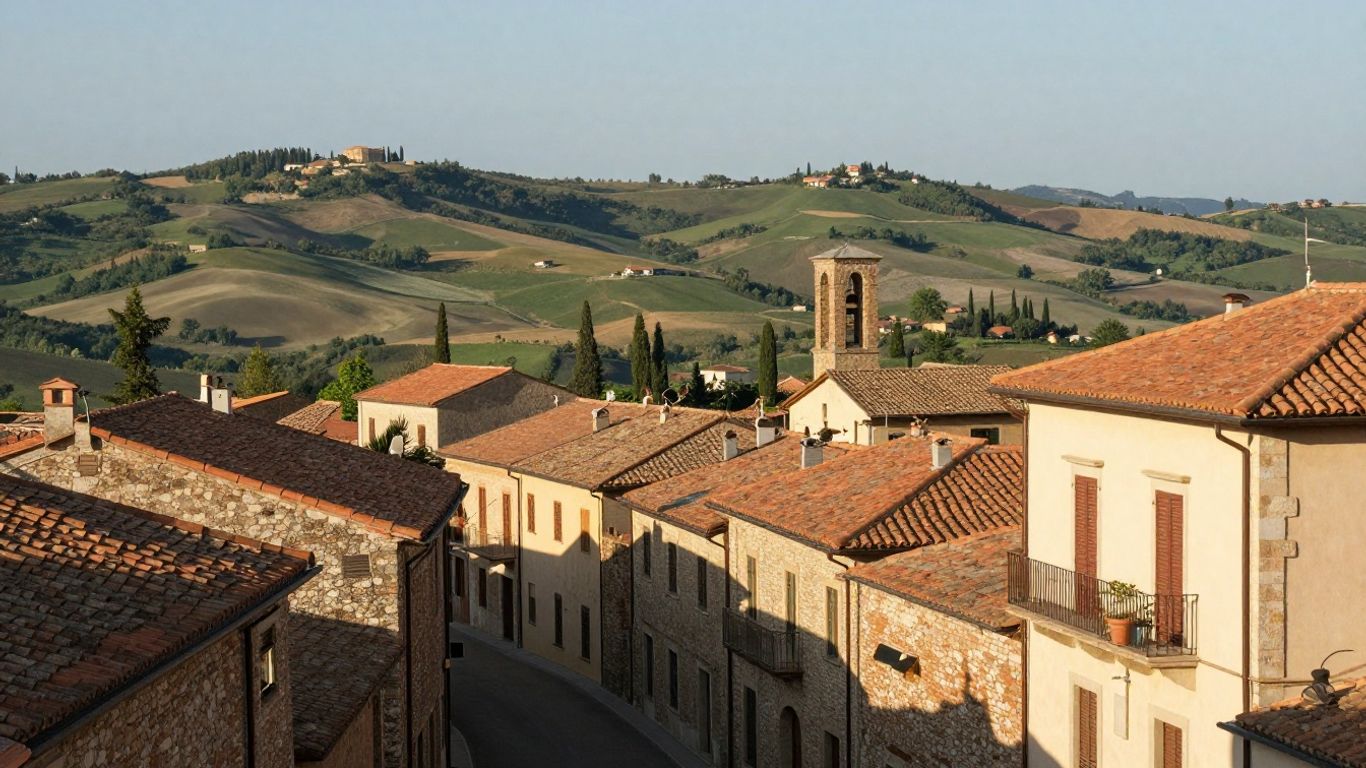
If you follow the literary trail, include the Colle dell’Infinito and make space to enjoy the view as well as the association. Sileni Hills, a retreat in Petriolo opening in June 2027, is planned as a base for exploring the Marche; Recanati makes a rewarding stop on a trip that also takes in other hill towns.
Give yourself time to move between the town’s lanes and its cultural sights without treating either as an errand. A visit can be as simple as a walk, a pause at a viewpoint and a closer look at Leopardi’s connection to the place. The slower rhythm suits Recanati well.
7. Visso: a stone-built borgo in the Sibillini Mountains
Visso’s stone-built character feels closely tied to its mountain setting. The town makes a natural stop when you are exploring the Sibillini, with a different atmosphere from the broad open views of the hill towns further east.
Walk through the centre and pay attention to the stone façades and the scale of the streets. Here, the landscape is not a distant backdrop; the mountains shape the feeling of the visit and make even a short wander feel like part of a larger escape into nature.
You can combine Visso with scenic stops in the surrounding area, adjusting the day to the weather and your energy. Keep your route flexible, especially if you are driving between mountain villages. A slower schedule leaves room to enjoy the setting rather than watching the clock.
8. Pioraco: riverside scenery and a paper-making tradition
Pioraco brings a change of pace, with riverside scenery and a long association with paper-making. It’s a good place to pause between hilltop towns, especially if you enjoy seeing how local identity grows from both landscape and craft.
Take a walk beside the water and notice how the river changes the feel of the village. The setting offers a more immediate connection to nature than a panoramic viewpoint: you’re close to the sound and movement of the water rather than looking out over it from above.
The paper-making tradition gives the visit another layer beyond the scenery. You can keep the stop simple—walk, look around, and learn about the craft—then continue your route at an easy pace. Pioraco works well as a distinctive detour rather than a town to rush through.
9. Matelica: a historic centre surrounded by vineyards
Matelica gives you a historic centre with vineyards in the surrounding countryside. The combination makes it a rewarding stop for travellers who like to connect a town walk with the agricultural landscape beyond it.
Begin in the centre, where the streets offer a change of scale from the open fields outside town. Then take in the rural setting around Matelica, where vineyards are part of the view. The transition from built heritage to cultivated land is one of the pleasures of visiting this part of the province.
If you’re planning several stops, leave space for a meal or a relaxed break rather than making the day entirely about driving. Matelica’s town-and-country character suits a slower itinerary, with time to notice how local life and the surrounding landscape sit alongside one another.
10. Camerino: a hilltop borgo with a rich university history
Camerino stands on a hilltop and carries a strong university history. That gives the town a particular character: it is both a historic place to explore and a centre shaped by generations of study and academic life.
Walk through the centre and let the different layers of the town come into view. The hilltop setting makes the approach part of the experience, while the streets offer a chance to slow down and look closely at the built environment. You’ll find a quieter mood than in a larger city.
Sileni Hills, a retreat in Petriolo opening in June 2027, is intended as a base for exploring the Marche. From there, Camerino can be one part of a broader trip through Macerata’s hill towns and mountain landscapes, rather than an isolated stop. Check local conditions as you plan your route.
Conclusion
The best borghi Macerata has to offer aren’t all alike: some draw you towards a wide horizon, others into narrow lanes, mountain scenery or a riverside walk. Choose a few that suit the pace you want, and give each enough time to feel distinct. You can build an itinerary around the Sibillini, focus on hilltop centres, or mix both. In this part of the Marche, a little breathing room often makes the day more memorable than another stop on the list.
Frequently Asked Questions
Which borghi are best for panoramic views?
Cingoli is especially known for its elevated outlook across the Marche, with views that can stretch towards the Adriatic. Recanati and San Ginesio also pair hilltop settings with open countryside or mountain views. Visibility varies, so give yourself time to enjoy the town even if the horizon is hazy.
Which towns are closest to the Sibillini Mountains?
Sarnano and Visso are natural choices for a trip that includes the Sibillini. Both make it easy to combine a village visit with mountain scenery. Check the weather and local conditions before setting out, and leave flexibility in your plans if you want to explore beyond the town centres.
Can you explore these borghi on foot?
Yes. Their historic centres are best explored on foot, though streets may be steep, uneven or narrow. Wear comfortable shoes and allow extra time for pauses. If you have mobility needs, check access arrangements for specific places in advance rather than assuming every lane or building is accessible.
How many towns should you visit in one day?
Two or three stops make a manageable day for most visitors, depending on driving time and how long you like to linger. Choose towns that fit one route, then leave room for a meal or an unplanned pause. Trying to cover all ten in one day would feel rushed.
What is Recanati known for?
Recanati is closely associated with the poet Giacomo Leopardi and offers places connected to his life and literary legacy, including the Colle dell’Infinito. The town also has hilltop lanes and viewpoints. You can enjoy it whether you follow a literary itinerary or simply explore on foot.
Is Pioraco worth visiting for more than the river?
Yes. Pioraco combines riverside scenery with a paper-making tradition, so the visit has both a landscape and a craft dimension. You can enjoy a walk beside the water and learn about the village’s association with paper-making, making it a distinctive stop between hill towns.
When is a good time to visit the borghi?
Spring and early autumn often bring comfortable conditions for walking, while summer offers long days for exploring. Weather differs between the coast, hills and mountains, so check the forecast for your route. Visiting outside the busiest hours can also make historic centres feel more relaxed.