

Key Takeaways
Recanati is compact enough for a rewarding day, but its literary and artistic history deserves an unhurried pace.
- Begin in the historic centre around Piazza Leopardi and the town’s medieval streets.
- Follow Giacomo Leopardi through his family home, library and Colle dell’Infinito.
- Make time for Villa Colloredo Mels, Lorenzo Lotto’s works and the town’s musical heritage.
- Pair viewpoints with churches, museums and a long Marche lunch.
- Use Recanati as part of a wider journey through Macerata, Loreto and the Adriatic coast.
Start with Recanati’s historic centre
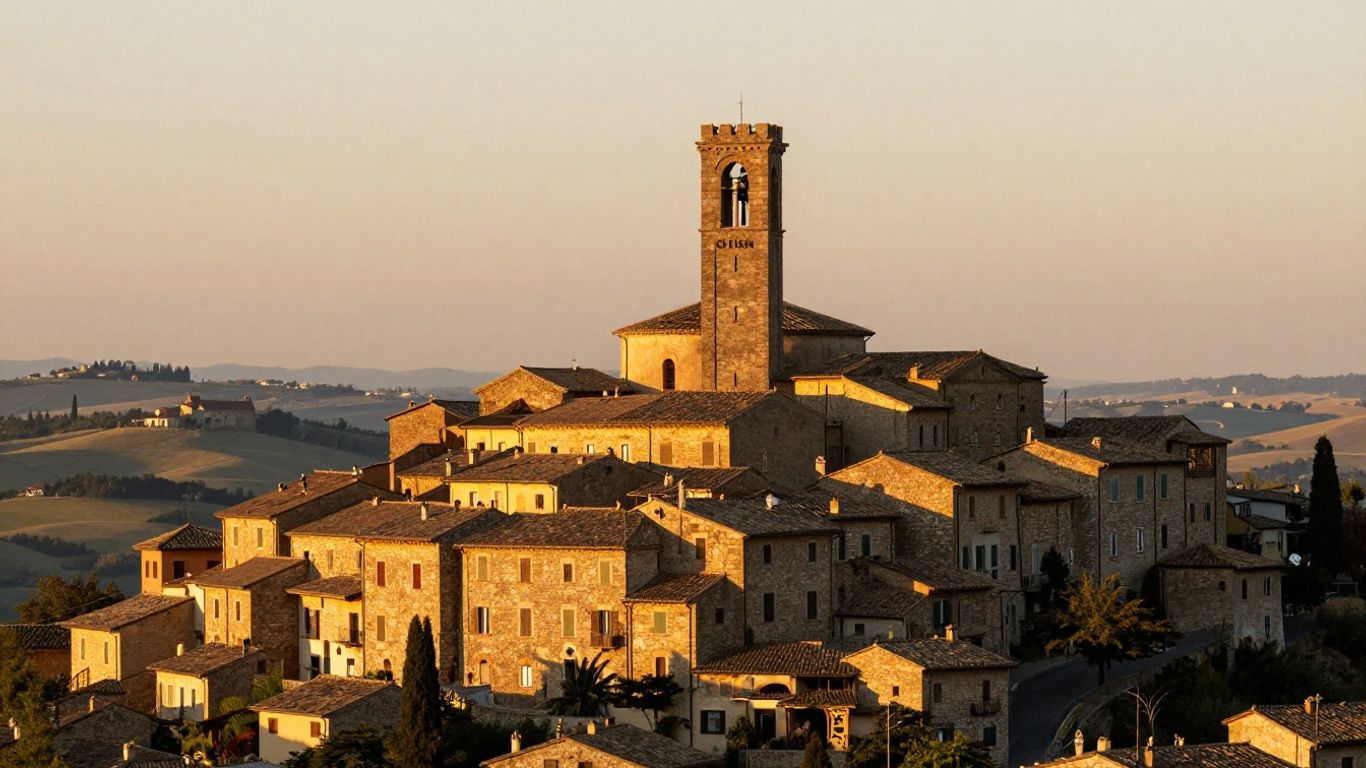
Recanati sightseeing works best on foot, with the old centre unfolding along a ridge rather than around one single monument. Start in the main square, then let the lanes lead you towards churches, palaces and open views. Wear comfortable shoes: the distances are manageable, but the streets rise and fall gently. This is the part of town where a quick visit often becomes a slower wander.
Piazza Leopardi and the Torre del Borgo
Piazza Leopardi is a natural starting point, with its civic buildings and the Torre del Borgo giving the centre a strong sense of place. Pause here before setting off, especially if you want to orientate yourself around the historic quarter. The square also gives you an easy transition from everyday Recanati to the literary world associated with Leopardi.
The Civic Tower and views over the town
The Civic Tower is one of the town’s recognisable landmarks and a useful reference as you explore. From the centre, look beyond the rooftops towards the rolling countryside and, on clear days, the distant Adriatic. The changing light matters here; a street you pass at midday can look entirely different in the late afternoon.
Palazzo Venieri and Recanati’s medieval streets
Palazzo Venieri belongs to the architectural fabric that makes Recanati feel more like a lived-in hill town than an open-air museum. Wander slowly through the adjoining lanes, noticing stone façades, small doorways and sudden openings towards the landscape. Keep the route flexible rather than trying to tick off every corner.
Santa Maria di Montemorello and other historic churches
Santa Maria di Montemorello is closely tied to the Leopardi story, while other churches, including the Cathedral of San Flaviano, add a wider historical frame. Step inside where open and allow a few quiet minutes for the interiors. The contrast between intimate religious spaces and broad hilltop views is one of Recanati’s understated pleasures.
Follow in Giacomo Leopardi’s footsteps
Leopardi is present throughout Recanati, but the most satisfying visit connects buildings, gardens and landscape rather than treating them as isolated stops. His childhood, study and poetry all belong to this compact part of the Marche. Reserve time for the places themselves, then read a little afterwards; the physical setting gives the words a sharper resonance.
Casa Leopardi and the poet’s family home
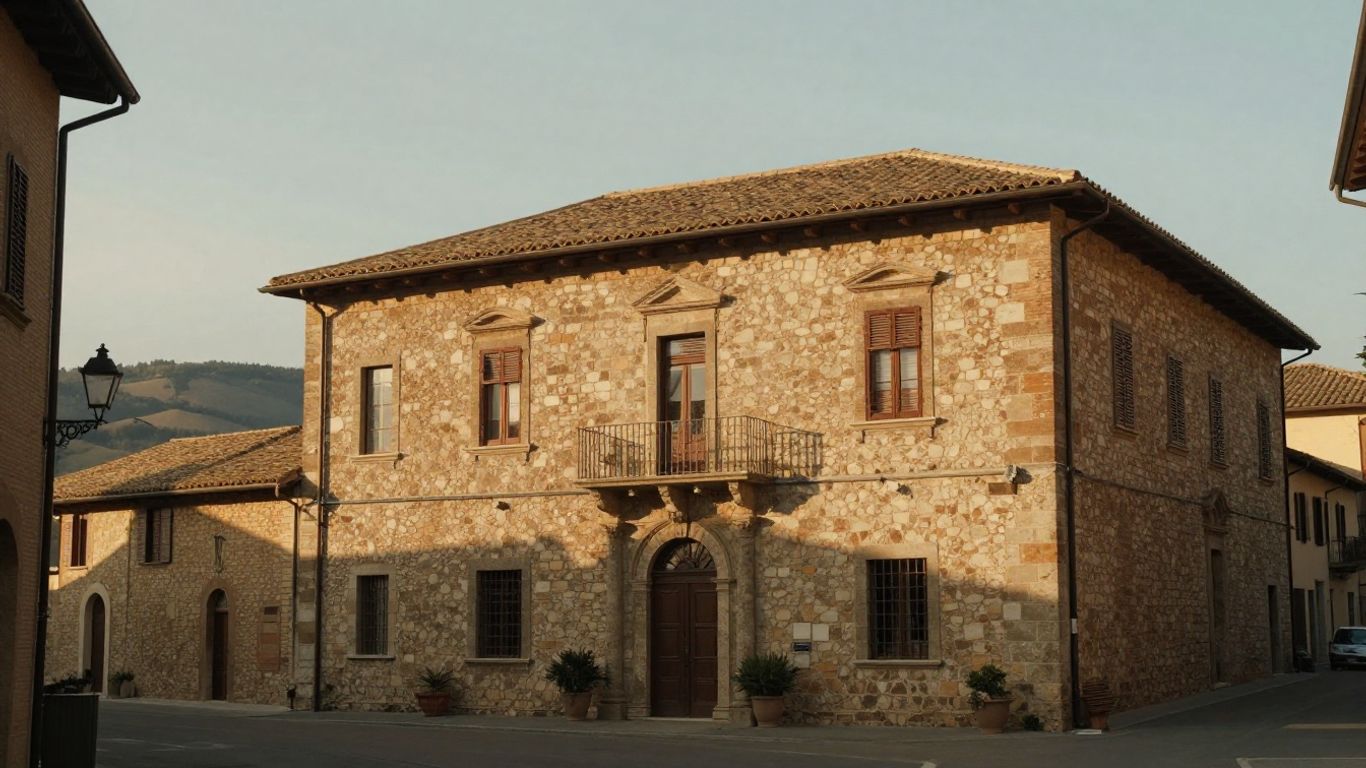
Casa Leopardi is the essential stop for understanding the family environment in which Giacomo grew up. The rooms and domestic setting make the story more tangible than a biography alone can do. Check the current visiting arrangements before you go, as access and routes through historic homes can change.
The library and places connected with Leopardi’s childhood
The library is central to the image of Leopardi as an intensely dedicated reader and student. Nearby places, including the house associated with Silvia, add human detail to the literary itinerary. Move between them without rushing: the interest lies in seeing how close these locations are within the town.
The hill of the “infinite” and Colle dell’Infinito
Colle dell’Infinito is the place most visitors associate with Leopardi’s famous poem. The attraction is not a theatrical reconstruction, but the relationship between a bounded viewpoint and the immense landscape beyond it. Bring the poem with you, stand quietly, and let the setting do some of the work.
The garden and landscapes that inspired his poetry
The garden on the hill, along with the surrounding countryside, helps explain why landscape is never merely decorative in Leopardi’s writing. Paths, walls and distant fields create changing frames as you walk. For wider context, this Recanati literary guide is a useful starting point when shaping your route.
Discover Recanati’s museums and cultural sights
Recanati rewards visitors who look beyond the poet. Its museums bring together literature, painting and music, so you can build a cultural day around several different interests. Opening arrangements vary, particularly outside the main season, and it is sensible to check official information before planning a tightly timed itinerary.
Centro Nazionale di Studi Leopardiani
The Centro Nazionale di Studi Leopardiani offers a deeper scholarly perspective on the writer and his work. It suits visitors who want context after seeing Casa Leopardi and Colle dell’Infinito. Even a short visit can add useful background to the more personal, place-based side of the itinerary.
Museo Civico Villa Colloredo Mels
Villa Colloredo Mels is the town’s principal civic museum and a welcome change of pace after literary sights. Its collections place Recanati within the broader artistic history of the Marche. Give yourself time to look closely rather than treating the museum as a box to tick between other appointments.
The works of Lorenzo Lotto
The works of Lorenzo Lotto are among the museum’s key attractions. Their colour, detail and emotional intensity deserve a proper pause, especially if you have mostly been walking outdoors. Seeing them in Recanati also helps connect the town to the Renaissance culture of the wider region.
The Beniamino Gigli Museum and Recanati’s musical heritage
The Beniamino Gigli Museum introduces another side of local identity through the celebrated tenor’s life and career. It gives the town a strong musical thread alongside its literary one. If you enjoy cultural history, set this visit against the churches and performance traditions found elsewhere in the Marche.
Enjoy the best viewpoints around Recanati
Recanati’s position is one of its great rewards: you can move from a narrow medieval lane to open countryside within minutes. The outlook changes with weather, season and time of day, so there is no single definitive view. Bring a little patience, particularly if the horizon is hazy when you first arrive.
The panorama from Colle dell’Infinito
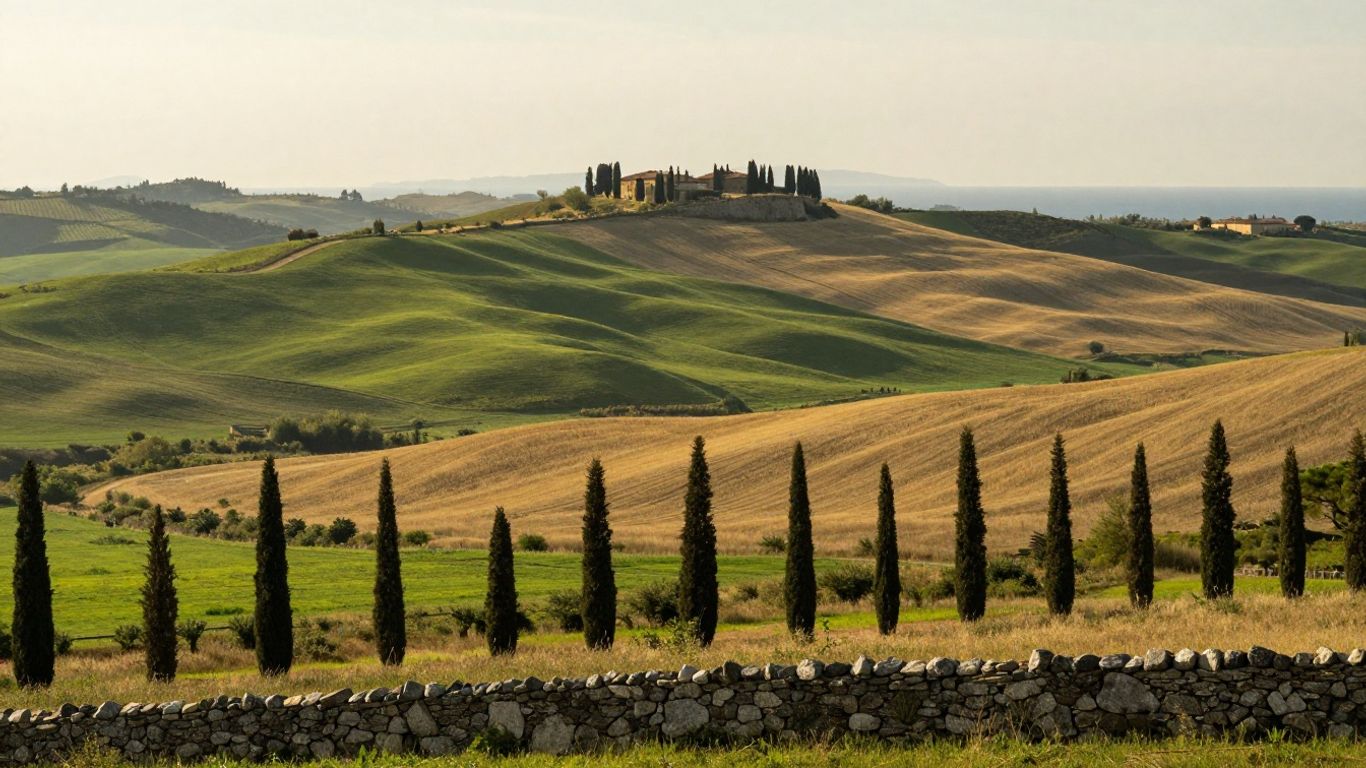
The view from Colle dell’Infinito is the obvious place to begin, but it is worth lingering rather than taking one photograph and leaving. Look for the layers of fields and hills, then notice how the town sits behind you. The setting becomes more meaningful once you have visited Leopardi’s home.
Views across the Marche countryside
From the ridge and its surrounding streets, the countryside opens in several directions. These are working landscapes, shaped by farms, villages and roads, not just scenic backdrops. Recanati is a fine introduction to the Marche, a region where art, food and rural life remain closely connected.
Sunrise, sunset and the changing seasonal scenery
Early morning gives the town a quieter feel, while evening softens the stone and hills with warmer colour. Spring brings fresh greens, summer offers longer light, and autumn adds muted golds to the fields. Winter can be particularly clear, though you will want an extra layer for exposed viewpoints.
How to combine viewpoints with the town’s main sights
Plan viewpoints as pauses between indoor visits rather than as a separate excursion. A practical sequence is the centre, Casa Leopardi, the museums, then Colle dell’Infinito towards late afternoon. This keeps the day varied and avoids repeating the same uphill stretches.
Plan a practical day of Recanati sightseeing
A little planning makes Recanati comfortable without making it feel over-organised. Most central sights belong to one walk, but visiting hours and ticket arrangements can affect the order. Leave space for coffee, photographs and an unplanned church or lane. That breathing room is part of the experience.
A walking route through the historic centre
Start at Piazza Leopardi, continue towards the Torre del Borgo and Palazzo Venieri, then follow the historic streets towards Santa Maria di Montemorello. Continue to Casa Leopardi and the museum quarter before ending at Colle dell’Infinito. This route combines architecture, literature and scenery without needing constant transport.
How long to spend in Recanati
Allow a full day if you want to visit Casa Leopardi, a museum and the main viewpoints without hurrying. A half-day works for a shorter walk through the centre and a single literary highlight. If Recanati is part of a wider Marche itinerary, staying nearby lets you return at a quieter hour.
Opening times, tickets and guided visits
Check opening times for Casa Leopardi, museums and churches shortly before travelling, since seasonal schedules can differ. Guided visits may add detail to the literary sites, while independent walking suits visitors who prefer a slower rhythm. Carry some flexibility rather than building the day around one narrow entry slot.
Getting around on foot, by car and by public transport
The historic centre is best explored on foot, while a car is useful for reaching Recanati from other Marche bases and continuing to nearby towns. Public transport may require more careful timetable planning. If you are staying at the Sileni Hills retreat, use it as a calm base for regional day trips; the retreat is scheduled to open in June 2027.
Make the most of Recanati and its surroundings
Recanati fits naturally into a longer Marche journey. You can combine its literary character with regional food, Loreto’s major pilgrimage destination, Macerata’s cultural life or a day by the sea. The wider Marche region rewards this slower pattern, with hill towns and coastlines often close enough to connect in one trip.
Local dishes and places to eat
Look for pasta, seasonal vegetables, local salumi, olive oil and Marche wines on menus around the town. A long lunch is not an interruption to sightseeing; it gives you time to reset before the afternoon museums. At Sileni Hills, regional products are part of the retreat’s breakfast offering, making it a practical base for food-minded travellers.
Day trips to Loreto, Macerata and the Adriatic coast
Loreto makes an easy cultural addition, while Macerata offers further art, architecture and performances. For sea air, continue towards Porto Recanati and the Adriatic coast. The contrast is enjoyable: Recanati gives you hilltop history, while the coast brings a flatter, more open rhythm.
Recanati or Porto Recanati: understanding the difference
Recanati is the inland hill town associated with Leopardi, museums and broad countryside views. Porto Recanati is the separate seaside town on the Adriatic. They work well together, but they are not interchangeable, so check which one your accommodation and transport plans refer to.
When to visit for quieter streets and cultural events
Spring and early autumn often offer comfortable walking conditions and softer light, while summer brings longer evenings and more visitors. For quieter streets, choose weekday mornings or travel outside peak holiday periods. Cultural programmes can change annually, so check dates before fixing your route.
Conclusion
Recanati gives you a rare kind of day out: literary history, serious art, living streets and open Marche landscapes within an easy walking distance. Start with the centre, follow Leopardi’s story, then leave time for a viewpoint and a proper meal. From there, the town naturally opens towards Loreto, Macerata and the Adriatic coast. You do not need to rush through every sight; the best memories often come from the pauses between them.
Frequently Asked Questions
Is Recanati worth visiting for one day?
Yes. A full day gives you enough time for the historic centre, Casa Leopardi, one museum and Colle dell’Infinito. With only half a day, choose either the literary route or the museum-and-viewpoint combination rather than trying to cover everything.
What is Recanati best known for?
Recanati is best known as the birthplace and home of Giacomo Leopardi. It is also notable for its historic centre, Renaissance art, civic museums, Beniamino Gigli’s musical legacy and views across the Marche countryside.
Can you explore Recanati without a car?
You can explore the central sights on foot, and walking is the most enjoyable option there. Reaching Recanati from other towns may require checking bus and train connections carefully, so a car can make a wider Marche itinerary more flexible.
Where can you see the view that inspired “L’infinito”?
The key viewpoint is Colle dell’Infinito, near the places connected with Leopardi in the historic centre. The garden and surrounding landscape provide the setting associated with the poem and are best appreciated without rushing through the visit.
How long should you spend at Casa Leopardi?
Allow enough time to see the rooms and library comfortably, then add time for the nearby literary locations. The exact visit length depends on access arrangements and whether you join a guided route, but it is better not to schedule it too tightly.
Is Recanati close to the sea?
Recanati is inland, while Porto Recanati is the nearby coastal town. They can be combined in one regional itinerary, although you should allow time for the road journey and decide whether you want a cultural morning or a seaside afternoon.
What should you combine with Recanati?
Loreto, Macerata and Porto Recanati are natural additions. You can also extend the journey towards Marche hill towns or the Monti Sibillini, depending on your interests and the time available. A regional base makes these combinations easier.