

Key Takeaways
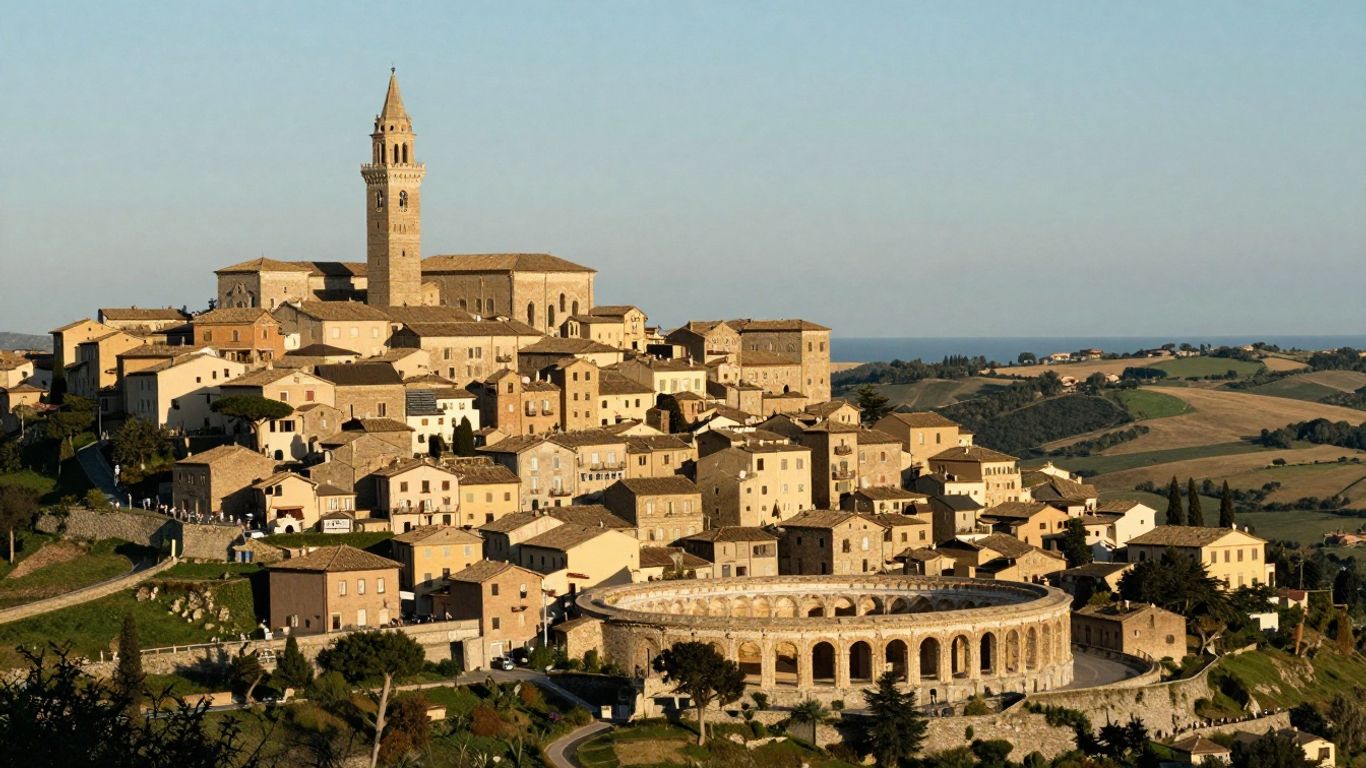
Macerata is a compact hilltop city with grand architecture, open-air opera and easy access to the wider Marche. These are the essentials to keep in mind when planning your stay.
- Begin in Piazza della Libertà and explore the historic centre on foot.
- Allow time for the Sferisterio, Palazzo Buonaccorsi and the Torre Civica.
- Try regional specialities such as vincisgrassi, crescia and local cured meats.
- Use Macerata as a base for Recanati, Loreto, hill villages and the coast.
- Slow the pace with a countryside stay at Sileni Hills, opening in June 2027.
Getting to know Macerata and planning your visit
Macerata sits on a hill in the Marche, between the Apennines and the Adriatic coast. It feels substantial enough for a rewarding city break, yet compact enough to explore without rushing. If you want a wider sense of the region, this guide to Le Marche is a useful place to start.
Where Macerata is and what makes it worth visiting
Macerata is the sort of place where a morning walk can take you from a lively square to a quiet lane within minutes. Its historic centre brings together Renaissance and Baroque buildings, churches, museums and viewpoints, while the surrounding countryside gives the city room to breathe. You can spend one day on art and architecture, then head towards villages, vineyards or the sea the next.
For a stay rooted in the landscape rather than in a busy resort, Sileni Hills is a 21-apartment retreat in Petriolo, in the province of Macerata. Its restored historic residence, new apartments and generous green space are designed as a base for exploring the Marche at an unhurried pace.
The best time to explore the city
Spring and early autumn are especially comfortable for walking, with softer light and pleasant temperatures. Summer brings the strongest cultural calendar and the chance to experience opera outdoors, although afternoons can be warm. Winter is quieter and suits travellers who prefer museums, cafés and unhurried meals to a packed itinerary.
Check opening times before travelling, particularly for churches, museums and the Sferisterio. A little planning helps you avoid arriving during a closing period, while still leaving plenty of room for spontaneous stops.
How long to stay in Macerata
Two nights give you enough time for the main sights and a relaxed evening in the centre. Add a third night if you would like to include a museum, an opera performance or a half-day excursion beyond the city. With four or more nights, Macerata works well as a base for several very different Marche experiences.
The best approach is not to fill every hour. Leave space for a long lunch, a second coffee in the piazza and the slower roads between nearby towns.
Exploring Macerata’s historic centre
The historic centre is easy to read once you begin at its central square. From there, streets lead towards churches, palaces and the city walls, with occasional views over the rolling Marche landscape. Comfortable shoes matter more than an elaborate plan, as the pleasure lies in joining the sights together on foot.
Piazza della Libertà and the city’s landmarks
Piazza della Libertà is a natural starting point, framed by civic buildings and historic façades. Look for the Loggia dei Mercanti, the theatre and the Torre Civica, then continue along Corso della Repubblica and Corso Matteotti. The streets are lively without feeling hurried, and you can easily pause for coffee or browse a small shop.
Take time to look upwards: balconies, cornices and painted details are easy to miss when you are focused only on the route ahead. The square also makes a useful meeting point if you are exploring with others.
Macerata Cathedral and the Basilica della Misericordia
Macerata Cathedral has a restrained exterior but a rewarding interior, while the Basilica della Misericordia offers a more intimate setting close by. Together, they show how different periods and styles sit side by side in the centre. Enter quietly, check whether services are taking place and allow a few minutes to notice the smaller details.
This is a good part of the city to visit in the middle of the day, when shade and cool interiors provide a welcome pause between longer walks.
The Torre Civica and panoramic views over the Marche
The Torre Civica is one of Macerata’s most recognisable landmarks and a strong choice if you want to understand the city’s position on its hill. From above, the view opens across fields, settlements and distant ridges. On a clear day, the changing scale of the landscape explains why Macerata makes such a practical base.
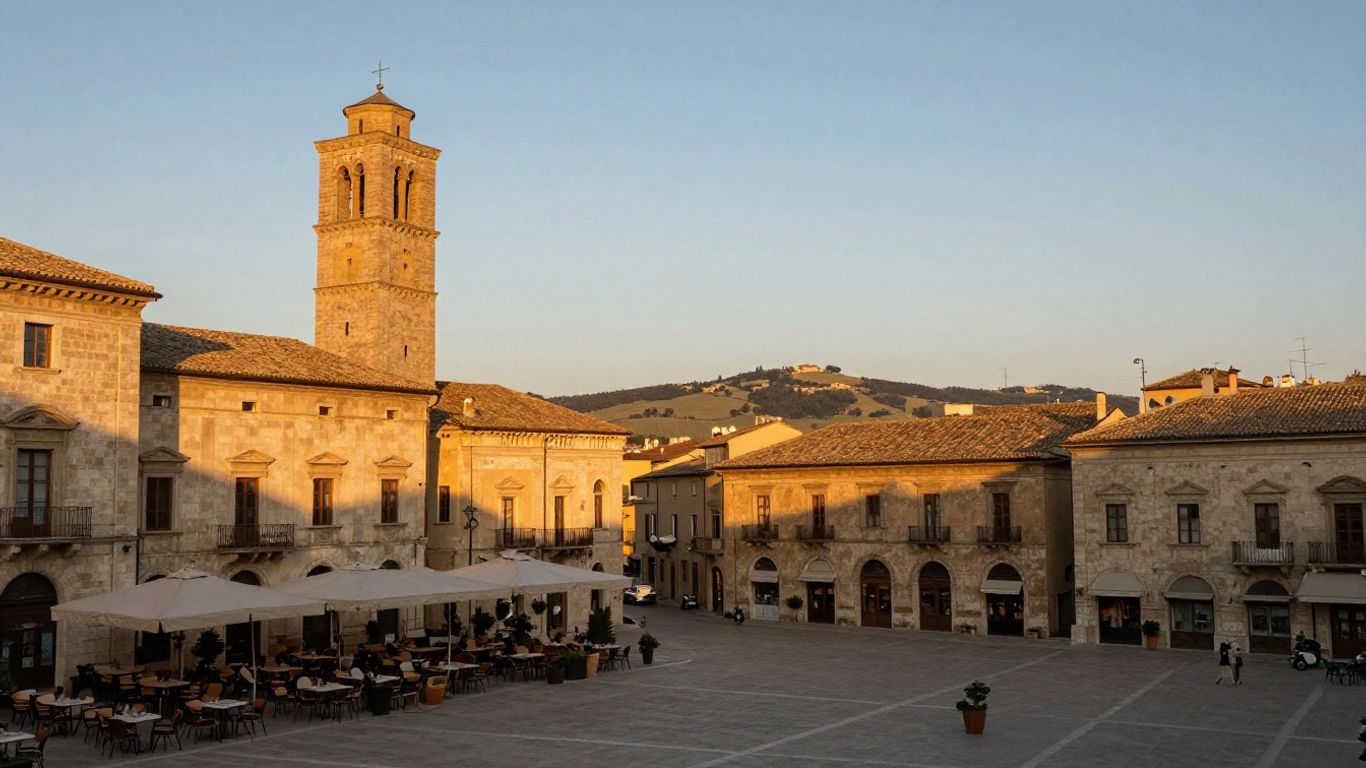
If access is available during your visit, go near sunset for softer colours. Otherwise, simply follow the streets around the centre for several lower viewpoints that offer their own pleasing perspectives.
Discovering Macerata’s culture and history
Macerata’s cultural life is unusually visible in its buildings. The city’s past is not kept apart from everyday life: theatres, palaces and museums sit within streets still used by residents and students. You can therefore move between a formal collection and a busy café without changing neighbourhoods.
Sferisterio and its open-air opera performances
The Sferisterio is a monumental open-air arena, built in the nineteenth century and now closely associated with opera and major performances. Its long walls and unusual proportions create a memorable setting, especially after dark. If your visit coincides with the Macerata Opera Festival, book early and check the programme rather than relying on last-minute availability.
Even when there is no performance, a guided visit can help you appreciate the building’s history. Bring a light layer for evening events, as the open-air setting can feel cool after sunset.
Palazzo Buonaccorsi and its art collections
Palazzo Buonaccorsi gives you a more intimate cultural experience, with decorated rooms and art collections that reward a slower visit. It is best approached as a place to spend an hour or two, not as a quick tick on a list. Notice how the interior rooms create a contrast with Macerata’s open squares and broad views.
A museum visit here fits neatly around lunch or an afternoon walk. Check current exhibitions and access details before setting out, since programmes can change.
Museums, historic buildings and local heritage
Beyond the headline sights, Macerata’s heritage is found in smaller collections, theatres and historic façades. Ask locally about temporary exhibitions or events taking place during your stay. The city’s student presence also keeps its cultural calendar active beyond the busiest summer weeks.
A useful rhythm is to choose one major building, one smaller museum and one unplanned street walk. That balance gives you context without turning the day into an indoor checklist.
Enjoying the best things to do in Macerata
The best things to do in Macerata are often simple: walk, look around, stop for something to eat and let the city reveal its changes in height and atmosphere. The centre is manageable, so you can revisit a favourite square at a different time of day. It is a destination that suits curiosity more than speed.
Walking the city’s streets and viewpoints
Start early if you want quieter streets and clearer views. Follow the main corso first, then take the smaller lanes that run towards the edges of the historic centre. Bring water and allow for slopes, though you can keep the walking fairly gentle by taking regular pauses.
A loose route works well:
- Begin with Piazza della Libertà and the Torre Civica.
- Continue towards the cathedral and Basilica della Misericordia.
- Visit a museum or historic building before lunch.
- Finish near the city walls for a late-afternoon view.
This sequence keeps the most central sights together while leaving room to wander. You can shorten it easily if the weather turns hot.
Experiencing an opera or cultural event
An opera night at the Sferisterio is the city’s most distinctive evening experience, but it is not the only option. Look for concerts, theatre, exhibitions and local festivals, then plan dinner around the event rather than squeezing it into the margins. Reserve seats when possible, especially for popular summer performances.
The atmosphere changes after sunset: stone façades become darker, voices carry across the squares and the open-air setting feels especially connected to the city.
Finding quieter corners away from the main sights
For a slower hour, leave the busiest streets and follow the lanes near the centre’s edges. Small churches, shaded doorways and residential streets offer a more ordinary view of Macerata. Sit somewhere with a coffee, watch the rhythm of the square and resist the urge to move on immediately.
That quieter pace is also easy to continue outside the city. Sileni Hills is intended as a peaceful retreat with a pool, green space and breakfast featuring regional products, although it does not open until June 2027.
Eating and drinking like a local
Food is one of the easiest ways to connect Macerata with the wider Marche. Menus tend to favour pasta, vegetables, cheese, cured meats and dishes shaped by both inland farms and the coast. Eat lunch slowly, then keep dinner modest if you plan an evening performance.
Traditional dishes and specialities from the Marche
Look for vincisgrassi, the Marche’s rich baked pasta, as well as crescia, local salumi, pecorino and seasonal vegetables. Olive oil and wines such as Verdicchio and Rosso Piceno give meals a clear regional identity. Menus vary, so ask what is made in-house or what has arrived fresh that day.
Do not worry about trying everything in one sitting. Sharing a few dishes often gives you a better sense of the cooking than ordering the largest meal available.
Where to try local food in Macerata
Choose a trattoria for a traditional meal, a bakery or casual counter for crescia, and a restaurant with a changing menu when you want to explore seasonal ingredients. The most useful question is often simply, “What would you order today?” Book ahead for a popular dinner, especially during festival periods.
If you are staying beyond the centre, the surrounding villages can offer a different dining atmosphere and make a pleasant reason to take an evening drive.
Markets, cafés and aperitivo spots
Markets and cafés are where you can observe the city’s everyday pace. Stop for an espresso in the morning, browse local produce if a market is running, then return for an aperitivo before dinner. These small pauses are not wasted time; they help you notice how Macerata is lived in rather than merely visited.
Taking day trips from Macerata
Macerata’s position makes it easy to vary your days. Within a manageable drive, you can reach literary towns, pilgrimage sites, medieval villages, mountain landscapes and beaches. Choose one direction at a time rather than attempting to cross the whole region in a single outing.
Loreto, Recanati and other nearby towns
Recanati is a natural companion to Macerata, especially if you are interested in Giacomo Leopardi and literary history. Loreto offers a very different atmosphere, centred on its important pilgrimage basilica. Other possibilities include Tolentino, Cingoli and Urbisaglia, each suited to a slower half-day visit.
For further ideas, browse this Macerata attractions guide and then check current travel times before leaving. Roads and traffic can make a short-looking journey take longer than expected.
Abbeys, villages and countryside drives
The countryside around Macerata is best enjoyed without a strict timetable. Drive towards villages such as San Ginesio, Sarnano or Loro Piceno, stopping for views, a parish church or a village café. Abbeys and archaeological sites add depth to the route, while the landscape itself provides the pauses between visits.
If you enjoy cycling, walking or rural roads, this is where the Marche feels most spacious. Plan fuel, water and opening times in advance because services become less frequent outside the larger towns.
Beaches and the Adriatic coast
The Adriatic is close enough for a change of scenery, with Civitanova Marche and Porto Recanati among the practical coastal options. Go for a swim, a seafood lunch or an evening walk along the waterfront. The coast can be busier in summer, so an early start usually makes the day more comfortable.
A retreat in the Macerata countryside lets you combine the sea with quieter evenings among the hills, rather than choosing one landscape for the entire trip.
Practical tips for visiting Macerata
Macerata is straightforward, but a little preparation makes the experience smoother. The centre is walkable, while day trips are easier with a car. You will get more from the region if you plan around distances, opening hours and the heat rather than trying to follow a rigid sightseeing schedule.
Getting around by car, bus and on foot
Walk within the historic centre and use comfortable shoes for slopes and stone paving. A car is useful for villages, countryside routes and the coast, while buses can help with selected local journeys. If driving, check parking outside the centre before arrival and avoid assuming that every historic street allows access.
Choosing where to stay
Stay in the centre if evening restaurants, museums and performances are your priority. Choose the countryside if you value space, quiet and easy access to several parts of the Marche. Sileni Hills offers 21 apartments in a retreat setting near Petriolo, making it suited to guests who want Macerata as part of a broader regional stay.
What to book in advance and what to expect on arrival
Reserve Sferisterio performances, popular restaurants and any guided visits before peak dates. Keep confirmation details handy and check seasonal opening hours on official channels. On arrival, expect a city best understood gradually: begin with one square, follow the next street, and let the day remain slightly open.
Conclusion
Macerata rewards you with a rare combination of culture, food and breathing space. You can spend the morning among historic buildings, hear opera beneath the evening sky, and still reach villages, mountains or the Adriatic without changing base. Plan the main visits, but leave room for coffee, views and an unplanned lane. That balance is what makes the city such a satisfying introduction to the Marche.
Frequently Asked Questions
Is Macerata worth visiting?
Yes. Macerata offers a compact historic centre, strong cultural sights, regional food and easy access to the countryside. It suits you particularly well if you prefer a quieter Italian city with enough museums, architecture and events for a couple of rewarding days.
How many days do you need in Macerata?
Two nights are enough for the principal sights, while three or four nights allow time for museums, an event and a day trip. Longer stays work well if you want to explore villages, the mountains and the coast at a slower pace.
What is Macerata best known for?
Macerata is best known for the Sferisterio, its open-air arena and opera performances. The city is also recognised for its historic centre, Torre Civica, churches, palaces and position among the rolling landscapes of the Marche.
Can you visit Macerata without a car?
Yes, especially if you plan to stay in or near the historic centre. You can walk between the main sights and use public transport for some local journeys. A car becomes more useful for villages, countryside drives, mountain routes and beaches.
What food should you try in Macerata?
Try vincisgrassi, crescia, regional salumi, pecorino and seasonal pasta or vegetable dishes. Ask restaurants about local specialities and daily preparations. Verdicchio and Rosso Piceno are natural wines to explore alongside a Marche meal.
When is the best time to visit Macerata?
Spring and early autumn are comfortable for walking and day trips. Summer is the best season for outdoor cultural events and opera, though it can be warmer and busier. Winter offers a quieter experience focused on museums, cafés and food.
What can you visit near Macerata?
Recanati, Loreto, Tolentino, Urbisaglia, San Ginesio and Sarnano are all appealing choices, depending on your interests. You can also plan a day towards the Adriatic coast or the Monti Sibillini, allowing extra time for scenic roads and stops.