

Key Takeaways
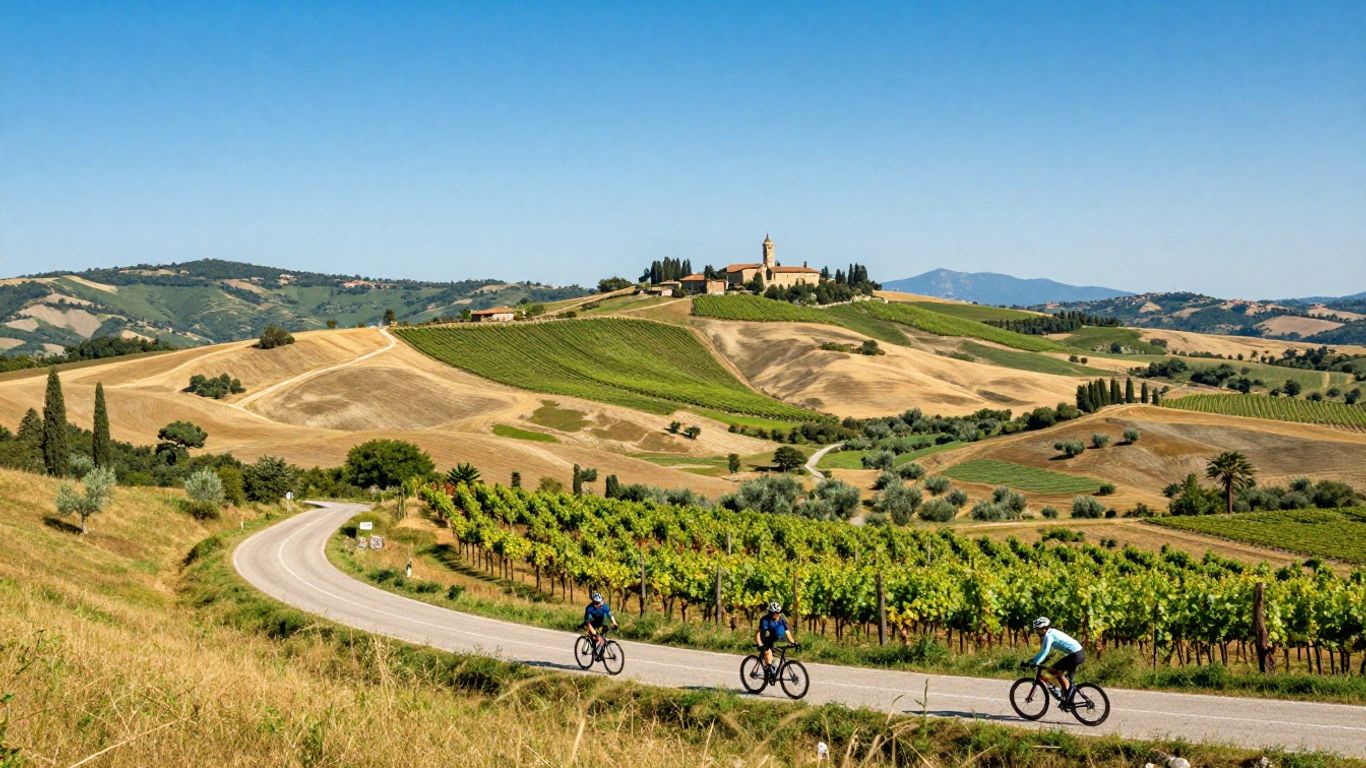
Macerata gives you a practical starting point for exploring Le Marche on two wheels, from ridge roads to farm tracks and coastal extensions.
- You can combine quiet provincial roads, gravel lanes and supported e-bike routes in one stay.
- Recanati, Cingoli, Fiastra, Loreto and the Adriatic coast offer distinct ride ideas.
- Hills make distance and elevation gain more significant than the map may suggest.
- Spring and autumn usually offer the most comfortable conditions for longer rides.
- A careful plan for water, navigation, weather and repairs makes rural riding far easier.
Why Macerata is a strong base for cycling in Le Marche
Macerata sits in a useful position between the Apennines and the Adriatic, with hill towns and agricultural valleys spreading out around it. That variety is the main reason cycling in Le Marche feels so rewarding: one day can be all quiet lanes and medieval villages, while the next reaches towards mountain scenery or the sea. You can ride for an hour or build a full-day loop without repeating the same landscape. The region also suits travellers who want cycling to sit alongside food, art and unhurried evenings.
The landscape from the Apennines to the Adriatic
From Macerata, you are close enough to look towards the Monti Sibillini while still having routes that gradually lead eastwards to the Adriatic. The landscape changes in layers: broad cultivated hills, wooded valleys, hilltop settlements and, further away, coastal roads. Vineyards, olive groves and wheat fields give the easier rides their character, while the mountain direction brings longer climbs and cooler air. A useful regional overview is this guide to Le Marche cycling, which places the inland and coastal landscapes in the same wider picture.
How the hills, valleys and ridge roads shape each ride
The roads around Macerata rarely stay flat for long. A route that looks modest on paper may include several short climbs, each followed by a quick descent or a view across another valley. Ridge roads are especially memorable because they make the terrain feel open, but they also expose you to wind. If you prefer a gentler rhythm, follow valley roads and treat the climbs to the villages as optional additions.
What makes Macerata practical for a cycling holiday
Macerata works well when you want cultural stops as part of the ride rather than a cycling-only itinerary. You can start with a coffee, visit a historic centre or Sferisterio, and still be on rural roads soon afterwards. The spread of settlements also gives you more chances to pause for food and water than a remote mountain route would. A flexible base matters when weather, energy or a late museum visit changes the plan.
Choosing between a town-based stay and a countryside base
A town-based stay puts cafés, restaurants and evening culture close at hand. A countryside base gives you quieter mornings, space to store equipment and a more immediate sense of the landscape. Sileni Hills, a retreat in Petriolo in the province of Macerata, is planned to open in June 2027 with 21 apartments, generous green space, a large pool, high-quality breakfast and regional products. For riders, that makes the choice less about chasing a single famous route and more about deciding how much quiet you want around each day.
Planning road cycling routes around Macerata
Road riding here rewards thoughtful planning rather than simply collecting kilometres. The most attractive roads often rise and fall between villages, so your average speed may be lower than expected. You can aim towards Recanati, Cingoli or the coast, then adjust the return leg according to fatigue and daylight. Before setting off, check the surface, junctions and elevation profile instead of relying on distance alone.
Quiet provincial roads, rolling climbs and summit finishes
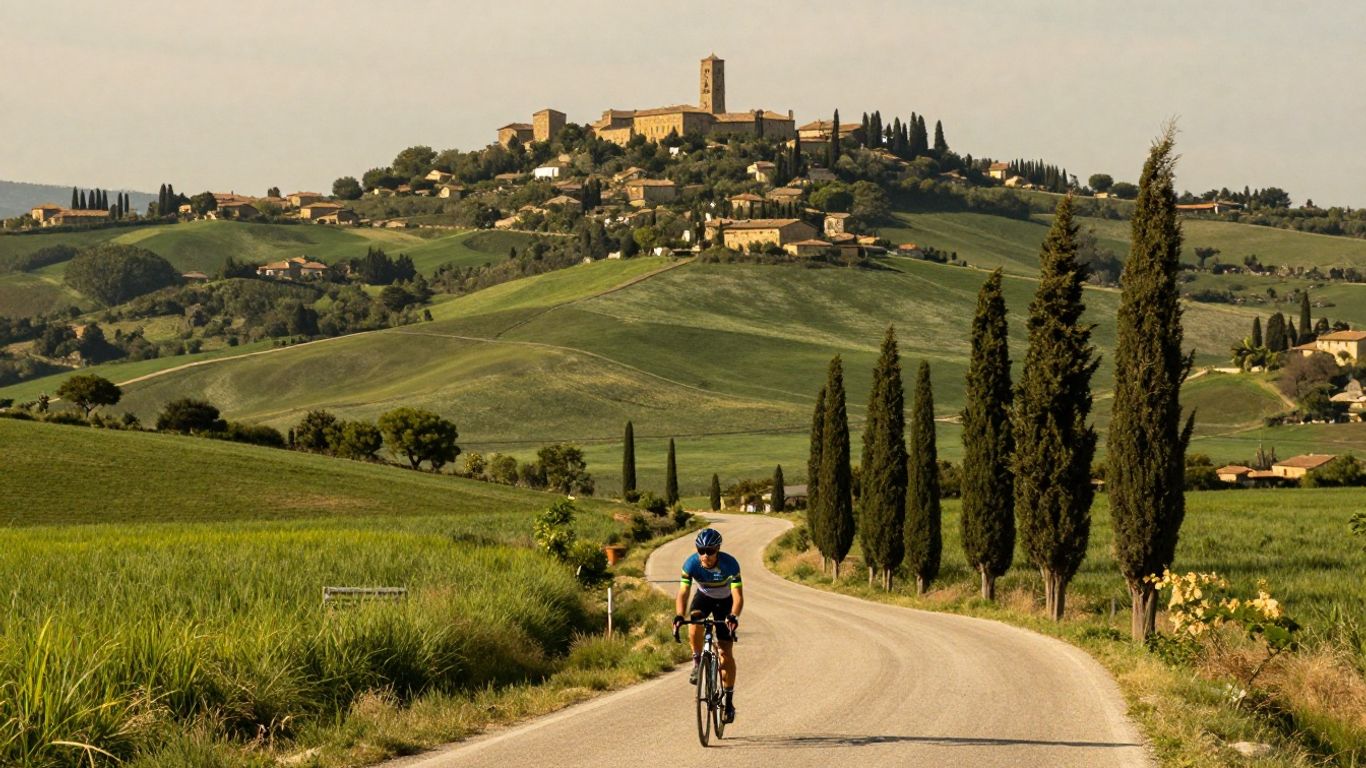
Small provincial roads provide much of the pleasure, particularly early in the day when traffic is light. They take you through fields and wooded stretches, with occasional ramps into villages or towards a ridge. A summit finish does not need to be a famous pass; reaching a hilltop square with a view can be a satisfying target. Build in time for stopping, because the best moments are often found just beyond the planned turning point.
Road routes towards Recanati, Cingoli and the coast
Recanati offers a natural cultural direction, with a ride that can include hilltop views and literary associations before returning through the countryside. Cingoli gives you a more climbing-focused day, while an eastward route can continue towards Loreto, Porto Recanati or Civitanova Marche. The official Marche cycling routes are useful inspiration for understanding how inland roads can connect with the coast, even when you create your own Macerata loop.
How to judge gradients, distance and elevation gain
Read the elevation profile as carefully as the route length. Three moderate climbs can feel harder than one steady ascent if the descents interrupt your rhythm, and a short steep ramp may require more effort than its distance suggests. Use a conservative estimate for speed, then add time for food, photographs and navigation. The table below gives a simple starting point rather than a fixed grading system.
| Ride type | Approximate distance | What to assess |
|---|---|---|
| Short local loop | 30–50 km | Repeated rollers and return options |
| Extended hill ride | 50–80 km | Total climbing and exposed ridges |
| Mountain-facing day | 80–120 km | Sustained ascents, weather and daylight |
After checking those figures, look at where the route can be shortened. A planned escape point near a main settlement makes a long ride feel more manageable, particularly if you are travelling with a mixed-ability group.
Managing traffic, junctions and fast descents
Quiet does not mean traffic-free. Slow down before blind junctions, keep your line on narrow roads and expect agricultural vehicles around bends. Descents can be steep, uneven or shaded, so control your speed before the corner rather than braking sharply inside it. Let someone know your intended route if you are riding alone, especially when the loop leaves the busier roads.
Discovering gravel routes through the Marche countryside
Gravel riding opens up a different version of the region, one made of farm access roads, pale tracks and links between small settlements. The charm lies in the changing surface and the feeling that you are travelling through working countryside rather than following a marked sporting circuit. Conditions can vary considerably after rain. A route that is easy in dry weather may become slow, muddy or temporarily impassable.
The farm tracks, white roads and river valleys to look for
Look for unpaved links between fields, vineyard edges and river valleys, but treat every track as something to verify rather than an automatic public route. River paths may be flatter, while farm roads often introduce short, sharp rises. The most enjoyable gravel loops mix several surfaces instead of committing to rough ground for the entire day. Carry enough water because services are less predictable away from villages.
Linking villages, vineyards and hilltop viewpoints
A good gravel day has a simple narrative: leave a village, cross open farmland, climb towards a viewpoint and return through another settlement. You might connect the countryside around Macerata with places such as Urbisaglia, Loro Piceno or Tolentino, allowing time for a bakery or a quiet square. This style of ride is less about speed than about making a series of small discoveries. Keep the route legible, with recognisable villages as checkpoints.
Checking surfaces, gates and route access before setting out
Recent route information is especially valuable on gravel. Check whether a track is marked as public, whether gates are normally open and whether a rain event has damaged a crossing. Respect farm work and turn around without argument when access is restricted. A saved alternative on nearby tarmac can rescue the day without compromising local relationships.
Choosing tyres, gearing and navigation equipment
A versatile gravel bike with comfortable tyres is usually more useful than an aggressively light set-up. Choose gearing that gives you control on loose climbs, and carry a phone or computer with an offline route as well as a paper overview. Dust can hide potholes and loose stones, so tyre pressure should favour grip and comfort over pure speed. The right equipment makes the countryside feel inviting rather than uncertain.
Exploring Le Marche by e-bike
An e-bike can make the hills more accessible without removing the character of the ride. You still need to pedal, plan and manage the terrain, but assistance can smooth out steep ramps or help a group stay together. It is particularly useful when you want to combine a longer cultural outing with several climbs. Choose the bike according to the surfaces you genuinely expect to ride, not the most ambitious route on your list.
Selecting a road, gravel or trekking e-bike
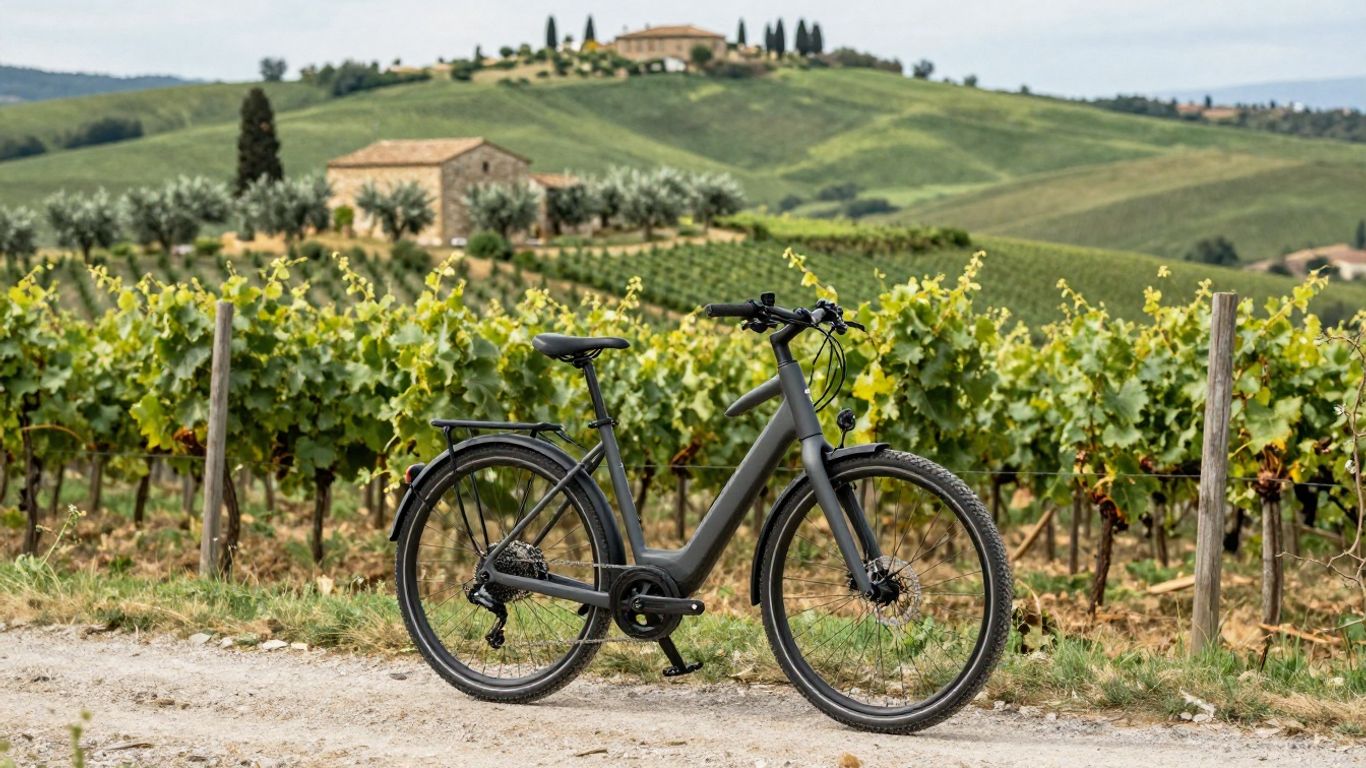
A road e-bike suits mostly paved loops and longer distances, while a gravel model gives you more confidence on broken lanes and unpaved links. A trekking e-bike is a sensible choice for relaxed mixed-terrain riding, carrying a small bag or adding town stops. Ask about frame fit, battery condition and the charging system before accepting a hire bike. Comfort matters more than a marginal gain in speed.
Planning battery range around long climbs
Battery planning should follow the route profile, rider weight, temperature and assistance level. Do not treat the estimated range on the display as a promise, especially if the day includes repeated climbs into hilltop villages. Start with a full charge and keep a reserve for the final ascent back to your base. If your route crosses a quiet area, identify a shorter version before you leave.
Where to find charging, bike hire and repair support
Confirm hire and repair arrangements before travelling, particularly outside the busiest summer period. Ask whether chargers, spare tubes, helmets and route advice are included, and find out where the nearest practical repair point lies. A countryside retreat can be peaceful without having every cycling service on site, so the logistics deserve the same attention as the route itself. Sileni Hills is planned as a base with apartments, green space and regional breakfast products, while specific cycling services should be checked as opening plans develop.
Using assistance levels efficiently on mixed-terrain rides
Use lower assistance on flat roads and reserve stronger modes for steep or loose climbs. This saves energy and gives you a more natural feel through villages and valley sections. You can also reduce the number of abrupt changes by selecting a steady setting before a climb begins. The aim is a consistent ride, not maximum assistance at every moment.
Ride ideas and landmarks around Macerata
The best itinerary may be a sequence of shorter rides rather than one heroic loop. Macerata gives you access to culture, hill towns, abbeys and mountain-facing roads, so you can vary the mood from day to day. Plan a landmark as the centre of each ride and leave room for an unplanned stop. That balance suits the region better than treating every outing as a timed challenge.
A cultural loop through Macerata and Recanati
Set out towards Recanati for a ride that combines undulating roads with a strong cultural destination. Allow time for the town, then return by a different line through the agricultural hills if the weather and legs permit. The route is well suited to a first day because you can shorten it at several points. Start early if you want the quietest approach and the best light across the ridges.
Hill climbs and panoramic roads towards Cingoli
The direction of Cingoli offers a more purposeful climbing day. Break the ascent into sections and use villages as places to pause, rather than judging progress only by the gradient. The higher roads reward patience with wide views, but exposed sections can feel demanding in wind or heat. Take a light layer even when the morning begins warm.
A countryside ride to Fiastra and the Abbey of Fiastra
Fiastra and the Abbey of Fiastra create a longer, more varied outing, linking open countryside with a substantial cultural stop. Check the total distance and return options before committing, since the route becomes more demanding as you move towards the mountain side. Pack food if you are riding outside normal opening hours. The abbey is best treated as a reason to slow the day down, not simply another waypoint.
Extending a ride towards Loreto or the Adriatic coast
For a coastward extension, aim towards Loreto or continue farther to Porto Recanati when you have enough daylight and a reliable return plan. The change from inland hills to sea air is satisfying, though the final kilometres may include busier roads. An early start gives you more time for a swim, lunch or a train-assisted adjustment if that is available for your chosen route. Keep an eye on wind, which can make the return feel very different from the outward leg.
When to ride and what to expect
Season affects the riding experience as much as route choice. Spring brings fresh fields and comfortable temperatures, while autumn can offer clear views and a calmer pace after the busiest holiday period. Summer is possible, but you need an early start and a disciplined approach to water. Winter can be beautiful on clear days, though shorter daylight and unsettled weather limit the safest options.
The best seasons for road, gravel and e-bike trips
Late spring and early autumn are strong choices for longer road and gravel rides. E-bikes extend your options when conditions are cooler, but battery performance and daylight still matter. Summer suits shorter morning routes followed by a slow afternoon near the pool or in a nearby town. Choose the season around the kind of day you want, not only the temperature.
Dealing with summer heat, wind and sudden weather changes
Leave soon after sunrise for exposed climbs and carry more water than you expect to need. Wind can build along ridges and coastal roads, while a cloudburst may turn an easy gravel track into a poor choice. Check the forecast shortly before departure and keep a flexible return route. A spare layer, sun protection and a pause in shade can make a marked difference.
Understanding harvest periods and rural road conditions
Harvest activity changes the feel of rural roads. You may encounter tractors, mud at junctions or temporary obstructions near fields and vineyards. Slow down, give machinery plenty of room and avoid assuming that a familiar track will be clear. These are working landscapes, and considerate riding is part of travelling well.
Matching route difficulty to daylight and fitness
Set the first ride at a level that lets you learn the terrain and your own pace. Add distance only when you understand how quickly the climbs, stops and navigation are accumulating. A simple way to plan a day is to choose the main objective, a shorter alternative and a firm turnaround time. This keeps the ride enjoyable for both experienced cyclists and companions who are less accustomed to hills.
Practical preparation for a safe cycling holiday
Good preparation does not make a ride rigid; it leaves you free to enjoy it. Save routes offline, check the weather and identify food and water points before leaving Macerata. If you are travelling with bikes, confirm the accommodation arrangements and transport rules in advance. The small details matter more when roads become narrow and services spread out.
Maps, GPX files and reliable route-planning tools
Use a current map alongside a GPX file, because digital routes can contain outdated surfaces or access assumptions. Inspect the elevation profile and satellite view around confusing junctions before departure. Share the file with your riding companions and keep a charging plan for your phone or computer. The regional cycling itinerary guide can provide broader inspiration, but your final route should reflect current local conditions.
Clothing, water, food and essential repair kit
Pack for a cool start and a warm climb, with gloves or a light layer that can be removed easily. Two bottles may be enough for a short loop, but longer or more remote rides require a refill plan. Carry food, puncture supplies, a pump, tyre levers, a multitool and a basic first-aid item. For gravel, add a little extra attention to sidewall damage and loose surfaces.
Bike transport, accommodation and luggage logistics
Check how your bike will travel, where it can be stored and whether your luggage needs to move between bases. Individual apartments can be useful when you want to keep your schedule independent, particularly for a group arriving with different riding plans. Sileni Hills is planned to offer 21 apartments and suites as part of its retreat in Petriolo, with its opening scheduled for June 2027. Confirm all bike-specific arrangements directly before booking, since those details may change during the project’s development.
Local etiquette, emergency planning and responsible riding
Ride predictably, greet people in villages and never block a narrow lane while taking photographs. Save local emergency numbers, your accommodation contact and a simple description of your route. If a mechanical problem leaves you unable to continue, move off the road and ask for help calmly. Leave gates as you find them, take rubbish with you and give walkers and farm vehicles priority.
Conclusion
Cycling in Le Marche is at its best when you allow the route to connect landscapes rather than rushing between landmarks. From Macerata, you can choose quiet roads, gravel tracks, e-bike-friendly climbs or a coastward day, then return to a slower evening among good food and open countryside. Plan honestly for the hills and weather, and the region gives you plenty of ways to ride at your own pace.
Frequently Asked Questions
Is Macerata a good base for cycling in Le Marche?
Yes. It places you within reach of rolling inland roads, hill towns, mountain-facing routes and the Adriatic, while also offering cultural and food stops for non-riding time.
What type of bike is best around Macerata?
A road bike suits paved loops, a gravel bike is better for farm tracks and rough lanes, and an e-bike can make repeated climbs more manageable. Your route surface should decide the choice.
Are cycling routes around Macerata flat?
Most routes are rolling rather than flat. Even shorter rides can include repeated climbs, so check elevation gain as well as distance before setting out.
When is the best time to cycle in Le Marche?
Late spring and early autumn are generally comfortable for longer rides. Summer is best approached with early starts, while winter requires more care with daylight and weather.
Can you cycle from Macerata to the Adriatic coast?
You can plan a coastward ride towards places such as Porto Recanati or Civitanova Marche, but check distance, traffic, wind and the return plan before committing.
Is gravel cycling suitable for beginners?
It can be, provided you choose well-checked tracks, moderate distances and a bike with suitable tyres. Avoid remote or rough routes until you understand the local surfaces and access.
What should you carry on a rural cycling route?
Take water, food, navigation, a charged phone, repair supplies, a pump, weather protection and identification. Add extra water and a shorter alternative when services are sparse.