

Key Takeaways
Le Marche makes it easy to shape a cycling holiday around your own pace, from coastal roads to demanding inland climbs. Choose your bike and base with the terrain, weather and distance in mind.
- Ride between the Adriatic coast, rolling countryside and the Apennines.
- Road routes range from gentler coastal outings to challenging mountain climbs.
- Gravel rides call for careful checks on surface, access and navigation.
- E-bikes can help with hills and mixed-ability days, but battery range needs planning.
- Build in time for villages, food and rest, not only kilometres.
Why cycle in Le Marche
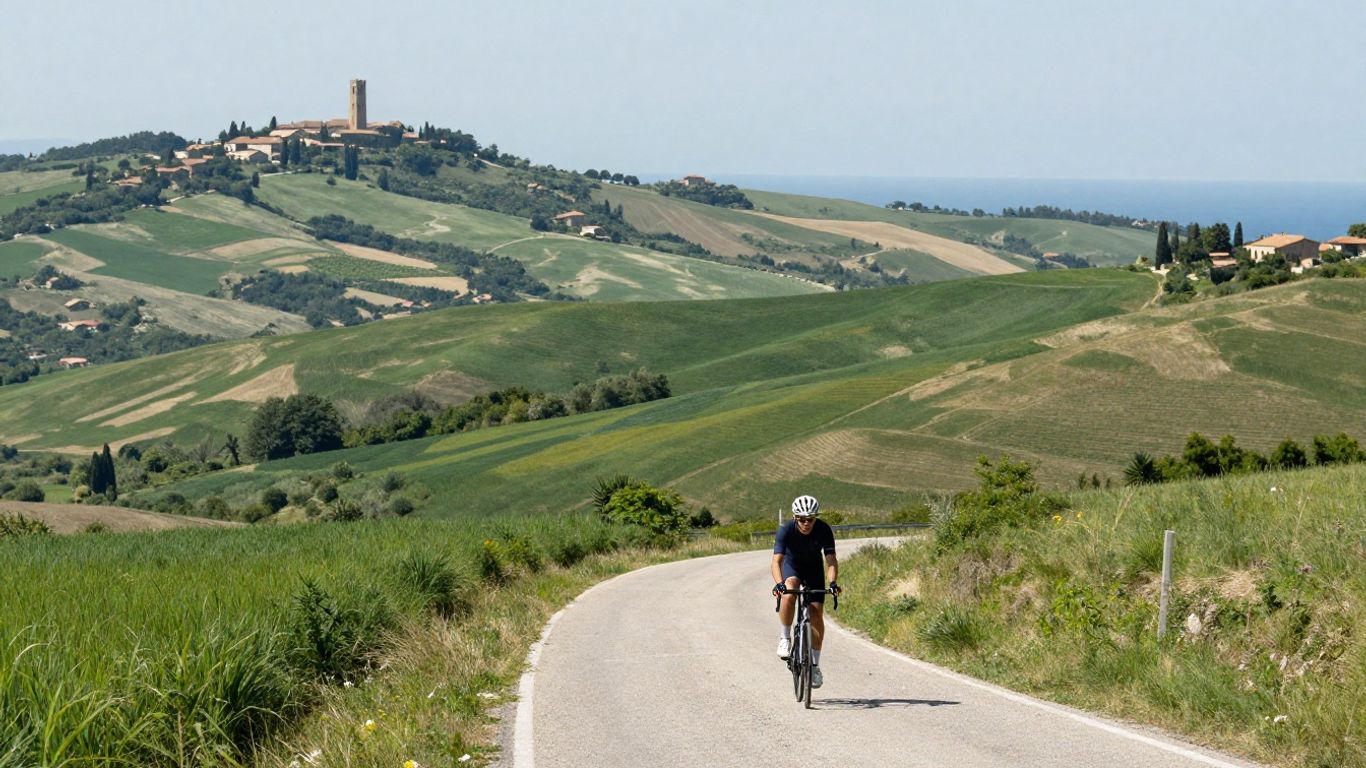
Cycling in Le Marche gives you a striking variety of landscapes within one region. You can make the coast part of a ride, then turn inland towards quieter roads and hilltop towns. The best days are often less about ticking off distance and more about letting the route unfold.
Ride from the Adriatic coast to the Apennines
The region stretches from the Adriatic towards the Apennines, so a cycling trip can take in very different scenery. Follow coastal stretches when you want sea air and a more open horizon; head inland when you’re ready for hills and mountain views. The change in terrain gives you a natural way to vary the effort across several days. Sileni Hills is planned as a retreat and a base for exploring Macerata and the wider Marche; it is due to open in June 2027.
Take in hilltop towns, vineyards and countryside
Inland rides bring you through cultivated hills and small settlements where a café stop can become the best part of the day. Rather than rushing between named sights, leave time to pause in a village square or look back across the landscape you’ve just crossed. For Macerata-area inspiration, explore these Macerata cycling routes before choosing a ride that suits your appetite for climbing.
Find quieter roads beyond Italy’s best-known cycling regions
Le Marche has its own character: a working countryside, historic towns and a slower rhythm between coast and mountains. You can plan a trip around riding without needing every day to be a big mileage day. That balance is part of the appeal: a challenging climb can sit alongside an unhurried lunch and an afternoon with nothing scheduled.
Road cycling in Le Marche
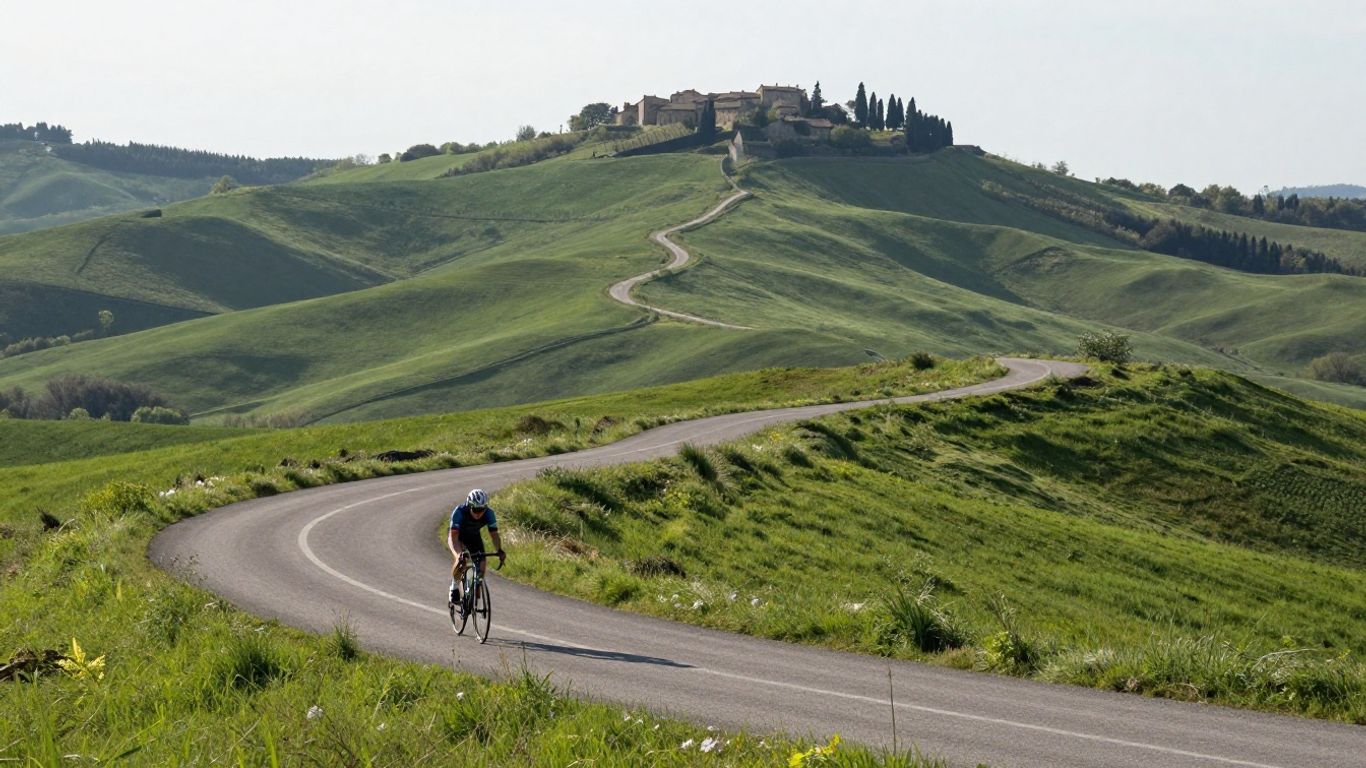
Road cycling here can mean a relaxed coastal outing or a day of sustained climbing inland. Think about the kind of effort you want before you choose a route, and leave room for the return journey to feel as manageable as the first half. These regional route ideas include varied itineraries across the Marche.
Choose between coastal rides and inland climbs
The coast and the inland hills offer different kinds of road day. Coastal routes can suit an easier spin, while inland roads bring more climbing and a greater need to pace yourself. Use this simple comparison as a starting point, not a substitute for checking a route’s actual elevation and conditions.
| Ride style | What to expect | A good fit when |
|---|---|---|
| Coastal | Sea views and a more open landscape | You want a gentler outing |
| Rolling inland | Repeated rises through countryside | You enjoy changing pace |
| Mountainward | Longer or steeper climbs | You’re ready for a demanding day |
Once you’ve picked a style, check distance and elevation together. A short route can still feel tough if it includes steep gradients, while a longer ride may be more comfortable when the climbing is spread out.
Explore routes around Urbino, the Conero and the Sibillini
Urbino, the Conero and the Sibillini each suggest a different day out: historic town surroundings, coastal scenery or mountain terrain. Treat them as broad areas to explore rather than assuming every road will suit your bike or experience. Before setting off, check the route on a map and decide where you’ll turn back if the day is taking longer than expected.
Match the terrain to your fitness and experience
Choose a ride that leaves you with enough energy to enjoy the destination, not just reach it. If you’re travelling with others, agree on a comfortable pace and a realistic distance before you start; a group ride is only relaxing when everyone feels included. Build in breaks, especially if the route has repeated climbs.
Plan for steep gradients and changing road surfaces
Inland routes can include steep sections, and road surfaces may vary, so it pays to prepare for more than a smooth, steady ride. Before you go, check the route profile and recent local information where available. Carry enough water and be ready to ease off on descents; arriving safely matters more than holding a planned speed.
Gravel cycling in Le Marche
Gravel riding suits the region’s mix of rural landscapes, but an unpaved line on a map is not automatically a suitable cycling route. Check what you’re likely to encounter, and plan a route that gives you options if conditions change. A little preparation makes it easier to enjoy the quiet stretches without turning the day into a navigation puzzle.
Look for farm tracks, rural lanes and unpaved climbs
Rural lanes and unpaved sections can take you away from busier roads and close to the everyday landscape of the Marche. The character of a track can change with weather and use, though, so don’t assume it will be smooth or passable throughout. Keep your route flexible and allow extra time for unfamiliar terrain.
Pick a route to suit your bike and tyre width
Your bike and tyres affect how comfortable you’ll feel on rougher ground. Before committing to a route, consider its unpaved sections, expected surface and the handling you’re used to. If you’re unsure, choose a shorter outing with an easy road alternative rather than testing unfamiliar equipment far from your start point.
Check access, surface conditions and navigation before setting off
A route should make sense both on the screen and on the ground. Confirm access, download or carry navigation you can use offline, and check the weather before leaving. If a track looks private, damaged or unsafe, don’t force the route; turn around and use a suitable alternative.
Combine gravel riding with stops in villages and local cafés
Gravel rides work well when you leave space for a proper stop. Pick a village or café as a natural midpoint, then use it to reassess your pace, water and remaining distance. That small pause can turn a ride into a more rounded day, especially when the route crosses quiet countryside rather than linking major attractions.
E-bike cycling in Le Marche
An e-bike can make a hilly route or a longer day feel more manageable, but it doesn’t remove the need to plan. You still need to match the bike to the surface, estimate the battery you’ll use and know what charging options are available. Choose your ride first, then decide whether assistance would make it more enjoyable.
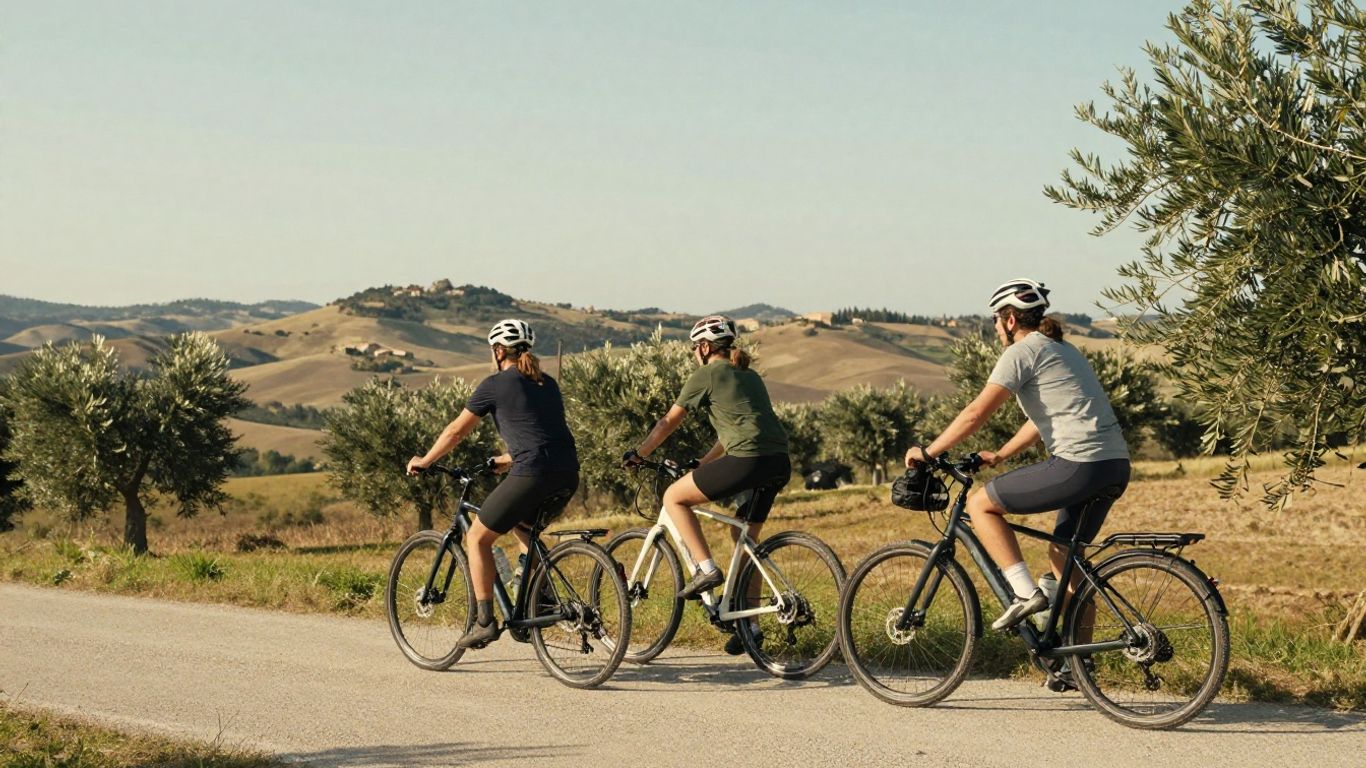
Choose an e-bike for hills, longer distances or mixed-ability groups
Electric assistance can help when the group has different fitness levels or when your chosen route includes significant climbing. It can also make a longer itinerary feel within reach, provided you plan around the battery. Sileni Hills is conceived as a retreat and a base for exploring the region; check what practical cycling arrangements are available when planning a future stay.
Compare road, gravel and trekking e-bike options
The right e-bike depends on where you intend to ride. A road-focused model, a gravel bike and a trekking option may feel quite different on the same route, especially once the surface changes. Ask a hire provider which bike suits your planned terrain, and check that you’re comfortable with its handling before heading out.
Plan battery range around climbs, distance and charging points
Battery use depends on more than the distance you cover: climbing and assistance settings matter too. Leave a margin rather than planning to arrive with no charge to spare, and confirm charging points before relying on them. If you can’t establish a clear charging plan, shorten the ride or choose a route with an easy way back.
Check where to hire an e-bike and arrange support
Hire availability, bike types and support arrangements can vary, so contact providers before travelling and confirm what is included. Ask about charging, repairs and what to do if the bike develops a problem. Sileni Hills opens in June 2027; check directly for information relevant to your dates rather than assuming facilities or hire are available.
Plan a cycling trip in Le Marche
A good cycling trip starts with a base and a realistic idea of the days you want to ride. Choose whether you’ll focus on road, gravel or e-bike outings, then look for routes within a comfortable reach. Keep a little unplanned time in your schedule for weather, rest and the places you pass through.
Pick a base near the routes you want to ride
Think about the balance you want between coast, inland towns and mountain scenery, then choose a base that fits those priorities. Macerata can work as a reference point for varied rides in the surrounding region. Sileni Hills, in Petriolo in the province of Macerata, is planned as a base for exploring the Marche and is due to open in June 2027.
Choose the best season for your preferred cycling
Spring and autumn can be appealing for outdoor activity, while summer brings longer days and a greater need to manage heat. Conditions differ between the coast and higher inland routes, so check the forecast for the areas you plan to ride. Whichever season you choose, start early on hot days and keep your itinerary adaptable.
Decide whether to ride independently or book a guided holiday
Riding independently gives you control over pace and stops, but you’ll need to plan routes and navigation yourself. A guided holiday may suit you if you’d rather have support organising the riding. Compare what is actually included before booking, and check that the daily distances and terrain fit your experience.
Pack for varied terrain and changeable weather
A compact kit helps you deal with small problems without carrying more than you need. Consider these essentials when preparing for a day ride:
- Spare tubes or a repair kit suited to your tyres.
- A pump or CO₂ inflator and basic tools.
- Offline route navigation and a charged phone.
- A light layer and enough water for the conditions.
Check your kit before each ride and adjust it for the route and forecast. For gravel, pay particular attention to tyre repairs; for longer or hillier days, make sure you can carry enough water.
Ride safely and comfortably
Good preparation lets you pay attention to the road and the scenery instead of worrying about what you’ve forgotten. Conditions can shift across a day, and local roads are used by residents as well as visitors. Ride predictably, take breaks when you need them and treat route plans as guides rather than promises.
Follow Italian road rules and ride visibly
Before riding, familiarise yourself with the road rules that apply in Italy and follow them throughout your trip. Wear visible clothing, use lights when conditions call for them and signal clearly. On narrow or winding roads, leave room for other road users and avoid assuming that drivers have seen you.
Carry essentials for punctures, navigation and basic repairs
Bring equipment you know how to use, including a way to fix a puncture and make basic adjustments. Keep navigation and a charged phone accessible, but don’t rely on a single device or a mobile signal. A little familiarity with your bike’s common repairs can save a long walk back.
Pace yourself on long climbs and in summer heat
Settle into a steady effort at the start of a climb rather than chasing a pace you can’t sustain. In hot weather, begin earlier, drink regularly and stop in shade when needed. If the heat or effort feels wrong, shorten the day; there’s no prize for completing a route that no longer feels safe.
Respect local communities, wildlife and the countryside
Use public roads and permitted tracks, keep noise down near homes and leave gates as you find them. Take litter away with you and give wildlife space. A considerate ride helps preserve the quiet, lived-in character that makes the Marche rewarding to explore.
Conclusion
Cycling in Le Marche can be as varied as you want it to be: an easy coastal ride, a day of rolling roads, or a challenging outing towards the mountains. Choose routes that suit your experience, check conditions and leave time for the places between the start and finish. Road, gravel and e-bike trips all benefit from the same simple approach: plan with care, ride at your own pace and stay open to a slower day. The landscape is best enjoyed when you’re not rushing through it.
Frequently Asked Questions
Is Le Marche good for cycling?
Yes. The region offers coastal, rural and mountain landscapes, giving you options for different types of ride. Check each route’s surface, distance and elevation before deciding whether it suits your experience.
What kind of bike should I bring?
Choose based on your planned routes. A road bike suits paved rides, while gravel or trekking bikes may be better for mixed surfaces. Confirm conditions and bike suitability before setting off.
Can beginners cycle in Le Marche?
Beginners can choose shorter, less demanding rides, but should still check elevation and road conditions. Start with a manageable route, allow time for breaks and avoid assuming that a short distance means an easy ride.
Is an e-bike useful in the Marche?
It can help on hilly routes, longer rides or trips with mixed-ability groups. Plan battery use around distance and climbing, and confirm charging options before relying on them.
When is the best time to cycle in Le Marche?
Spring and autumn can be pleasant periods for riding, while summer may mean heat and longer daylight. Check the forecast for your chosen area and adjust your start time and route accordingly.
Is gravel cycling possible in the region?
You can plan rides that include rural and unpaved sections, but conditions and access may vary. Check the route, surface and permissions in advance, and have an alternative if a track is unsuitable.
Should I book a guided cycling holiday?
A guided trip may suit you if you want help organising rides and support during the holiday. Independent riding offers flexibility. Compare the arrangements and daily demands with your own preferences before booking.