

Key Takeaways
The Macerata Opera Festival pairs major opera with the atmosphere of a historic Italian city. These are the essentials for planning your visit:
- Performances take place at the remarkable open-air Sferisterio.
- The main season generally runs through July and August.
- Book early for popular opera nights and preferred seating.
- Allow time for dinner, a stroll and the wider Marche region.
- Outdoor conditions shape what you wear and bring.
What is the Macerata Opera Festival?
The Macerata Opera Festival is one of Italy’s best-known summer opera events. Its setting in Macerata, in the Marche, gives you a cultural trip without the crowds associated with Italy’s largest destinations. The festival is centred on the Sferisterio, while related events extend into the city. For useful background, you can also explore this Macerata Opera Festival overview.
The history and reputation of the festival
Opera was first performed at the Sferisterio in 1921, with the modern festival re-established in 1967. Over time, its repertoire broadened from familiar Italian works to modern and international productions. That history still gives the festival a distinctive identity: serious opera, but presented in a venue that feels connected to the city rather than sealed away from it.
Why the Sferisterio makes it unique
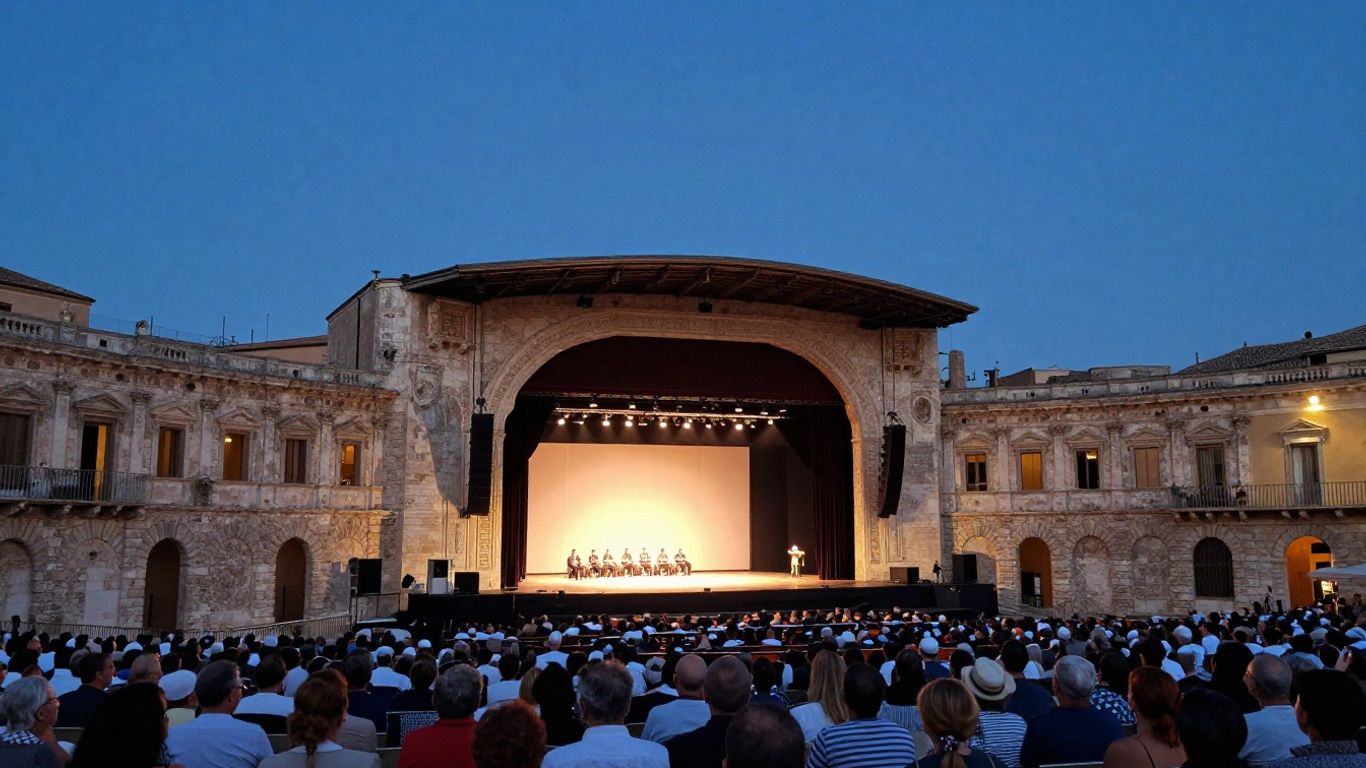
The Sferisterio is monumental without feeling remote. Its long neoclassical walls frame the stage and create a strong sense of occasion before the music begins. You are watching opera under the night sky, with the architecture doing much of the visual work. The setting changes everything, especially when the first notes carry into the warm evening air.
The opera, concerts and other performances
The programme usually centres on several opera productions, supported by concerts, talks and cultural activities. EXTRA MOF adds events across Macerata, including musical projects, cultural aperitifs and inclusion initiatives. This broader programme is a good reason to browse the festival’s city-wide events rather than choosing only one performance.
When the festival usually takes place
The main season generally occupies July and August, although exact dates and productions change each year. Check the current programme before booking travel, particularly if you want to attend an opening night or see more than one title. A summer visit also gives you time for the city’s evening restaurants and nearby hill towns.
Understanding the Sferisterio venue
The venue is central to the experience, so it helps to understand its layout before buying a ticket. It was built as an arena and retains a sense of scale that is very different from a conventional theatre. You should also remember that it is open to the weather. A little preparation makes the long evening more comfortable.
The story behind Macerata’s open-air arena
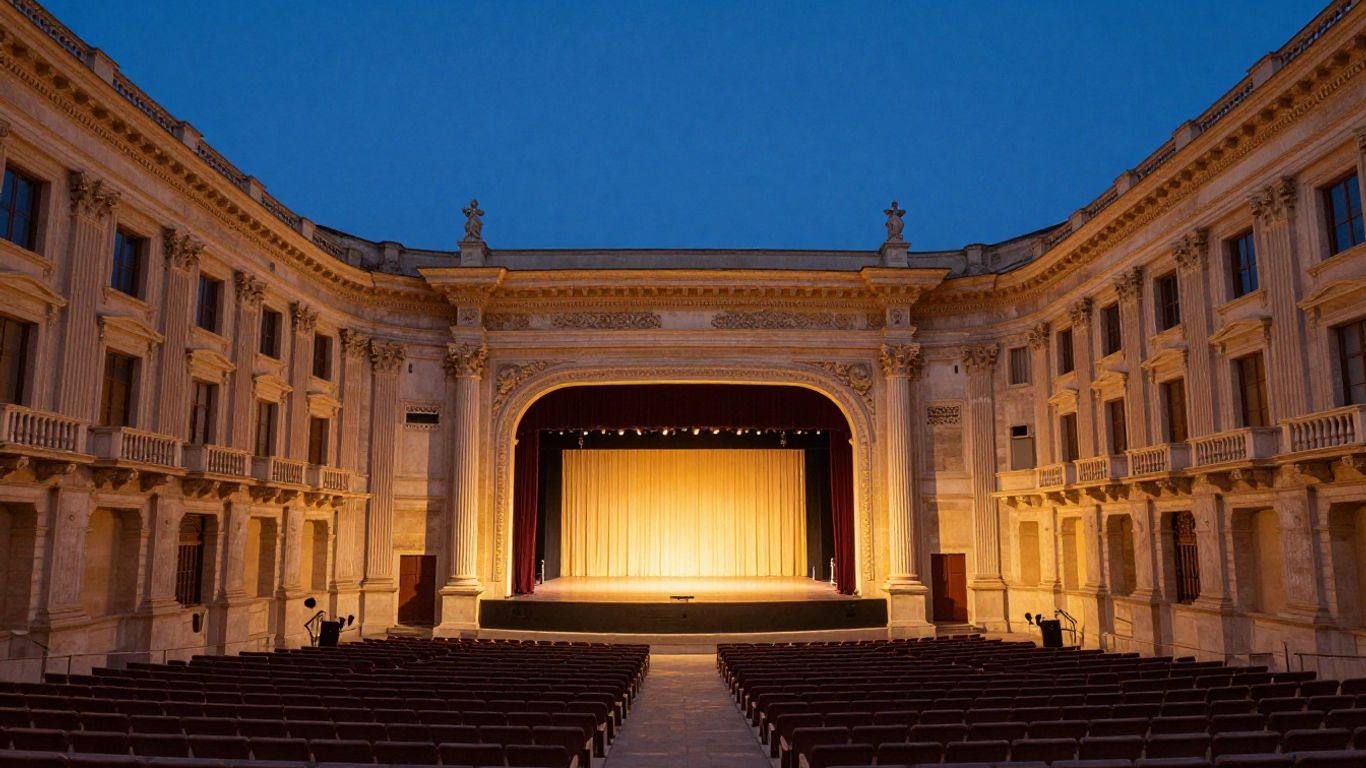
The Sferisterio was constructed in the nineteenth century for pallone col bracciale, a historic ball game. Its tall walls and broad interior were designed for spectators, but the building later found a new life as an opera venue. That unusual origin explains why the arena feels both athletic and theatrical, with a deep stage framed by imposing masonry.
What the seating layout is like
Seating varies according to the production and set design. There are usually numbered seats arranged in the arena, with different sections offering different relationships to the stage. Read the seating plan carefully rather than assuming that the most expensive category automatically suits you. Distance, angle and whether you prefer a wider view all matter.
How outdoor performances affect the experience
Performances begin after sunset, when the heat usually softens, but evenings can still be warm or unexpectedly cool. Sound and sightlines may feel different from an indoor auditorium, particularly if there is wind. Arrive early, settle in without rushing and keep a light layer with you even after a hot day.
Choosing the best seats for views and sound
The ideal seat depends on your priorities. Central positions generally give a balanced view, while seats closer to the stage can make faces and detail easier to follow. If you are new to opera, a central mid-range position is often a sensible compromise. Look at the official plan and check whether the production uses a large or unusually deep set.
Planning your visit around the programme
A good festival visit is built around the programme, not fitted around it afterwards. Start with the dates, then add travel, meals and at least one unhurried morning. Macerata works particularly well when you resist the temptation to pack every hour. The Marche rewards a slower rhythm.
When the annual programme is announced
The announcement date varies, so monitor the festival’s official channels and ticket office. Once the programme appears, note the performance dates, start times and any special events that require separate booking. If you are travelling from abroad, wait for confirmed dates before committing to non-refundable arrangements.
How to compare operas, concerts and special events
Opera is the main reason most visitors come, but concerts and talks can give you a different way into the festival. Compare the title, language, production approach and start time, not just the cast. A first-time visitor might choose one traditional opera and one contrasting event, leaving space for the city between them.
How long performances usually last
Many opera evenings take several hours, often including one or more intervals. The exact running time depends on the work and production, so check the event information before making a dinner reservation. Allow extra time for leaving the arena and walking back through the centre after the applause.
What to expect from the artistic style and productions
Productions can range from visually traditional interpretations to bold contemporary settings. Read the programme notes if you prefer to know the director’s approach in advance. You do not need specialist knowledge to enjoy the evening, though learning the broad plot beforehand can make an unfamiliar work much easier to follow.
Booking tickets for Macerata Opera Festival
Tickets are best treated as part of your travel planning. Decide first which performance matters most, then choose your accommodation and transport around it. Use official sources for availability, prices and any changes. A calm booking process is especially useful when you are arranging a longer Marche itinerary.
Where to buy official tickets
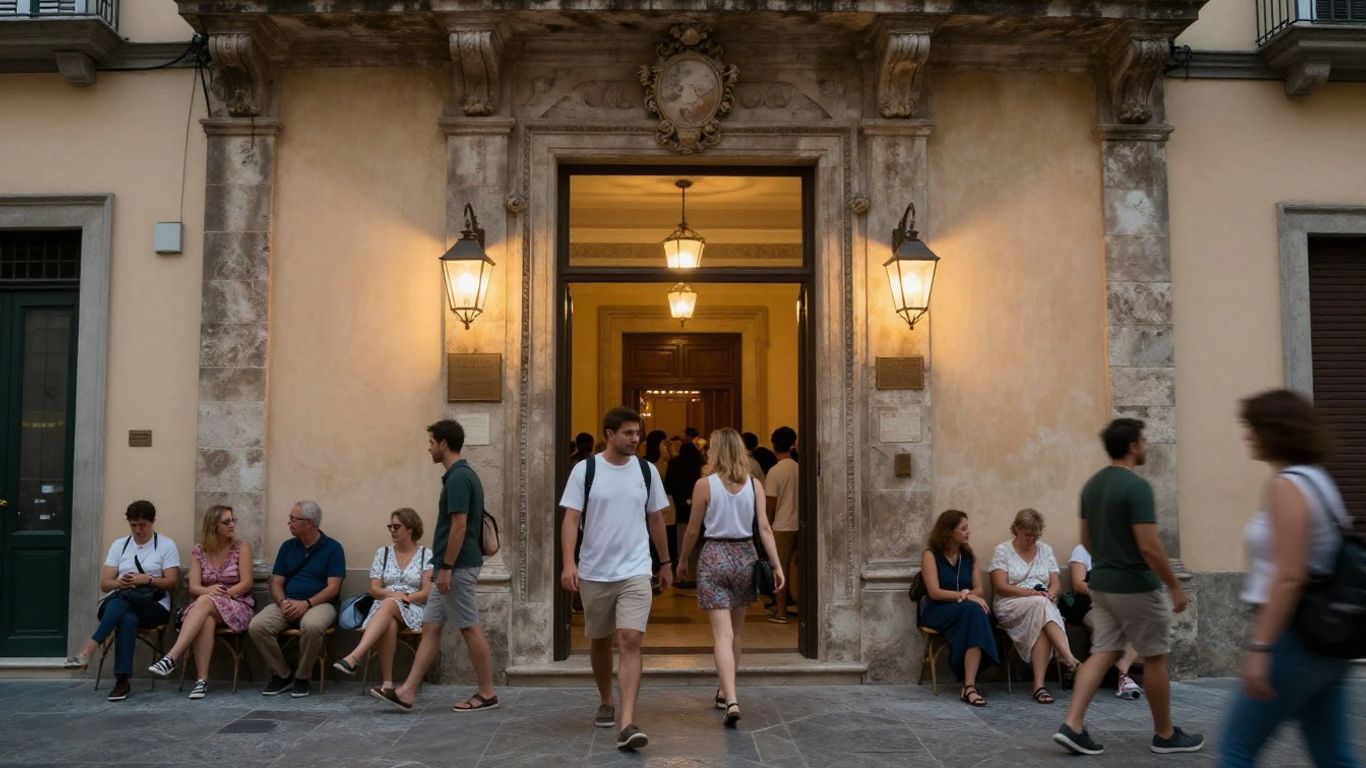
Use the festival’s official ticket office or its authorised online sales channel. Check the event details, venue, date and collection instructions before paying. Avoid relying on informal resale listings, particularly when a popular performance is close to selling out.
Ticket types, prices and seating categories
Prices vary with the production, date and seating area. Compare the map with your own priorities: an unobstructed central view may matter more than proximity, while a first visit may justify spending a little more. Keep the confirmation accessible and check whether identification is required at entry.
When to book for the most popular performances
Book as soon as sales open if you want a particular opera, weekend date or central section. Less sought-after dates may offer more flexibility, but waiting can reduce your choice. If your plans are fixed, tickets should come before restaurant bookings and day-trip arrangements.
Discounts, concessions and group options
Concessions and group arrangements depend on the season and ticket policy. Check the current terms rather than assuming a discount applies. If you are travelling with several people, coordinate the booking early so you can sit together without compromising the whole evening.
What to do if an event sells out
Check the official channel again, since returns can appear later. You can also choose another performance of the same production or look at a concert or EXTRA MOF event. Keep your itinerary flexible enough to accept a different evening; the festival atmosphere extends beyond one title.
Getting to Macerata and finding your way around
Macerata sits inland in the Marche, between the Apennines and the Adriatic. You can reach it by rail, road or a combination of both, but the final journey is easier when planned in daylight. Once you arrive, the historic centre is compact enough for a pleasant evening on foot.
Travelling to Macerata from major Italian cities
From Bologna, Florence or Rome, expect a journey that may involve a train connection or a hire car. Ancona is the most useful larger transport hub for many visitors, while Pescara can also work depending on your route. Check current timetables and allow generous time for the final connection.
Public transport, driving and parking options
Driving gives you more freedom for the surrounding villages, but parking near the centre can be limited during performances. If you drive, identify a car park before the evening and allow time to walk uphill. Public transport is practical for reaching Macerata, though late-night return options should be checked carefully.
Reaching the Sferisterio from the town centre
The Sferisterio is close to Macerata’s historic centre. From central accommodation, walking is usually the simplest option, although some streets may be uphill or uneven. Leave early enough to collect tickets, find your entrance and enjoy the atmosphere outside the arena rather than arriving as the doors open.
Useful local areas for restaurants and pre-show drinks
The streets around the historic centre are the natural place to eat before a performance. Choose an early meal and tell the restaurant your curtain time. Regional specialities and local wines make the meal part of the evening; this guide to Marche food and wine can help you recognise dishes worth trying.
Where to stay during the festival
Staying near Macerata makes late performances much easier, but you do not have to remain in the city every night. A countryside base can suit you if you are combining opera with villages, walking or the coast. The right choice depends on whether the festival or the wider region is the centre of your trip.
Staying in Macerata’s historic centre
The centre keeps you close to the Sferisterio, restaurants and evening walks. It is the most convenient option for a short opera break, especially if you do not want to drive after the performance. Book early for festival weekends, when central rooms are likely to be in demand.
Hotels, guesthouses and self-catering accommodation
Choose a room in town for convenience, or an apartment if you prefer more space and flexibility. For a quieter base, Sileni Hills is a retreat in the Marche with apartments, green space and a pool, opening in June 2027. It suits a slower stay in which opera is one part of a wider regional journey.
Exploring nearby towns in the Marche region
You can also stay in a hill town and drive into Macerata for selected performances. San Ginesio, Sarnano, Tolentino and Urbisaglia offer different atmospheres, while the Adriatic coast works for a combined sea-and-opera trip. The hidden villages of Le Marche are useful inspiration for adding a quieter day.
How many nights to plan for your trip
For one performance, two nights can work. Three or four nights give you time for a second event, a proper day in Macerata and a countryside excursion. If you are travelling from overseas, add a night to absorb transport delays and enjoy the region without turning the visit into a schedule of transfers.
Practical tips for enjoying an open-air opera
The best preparation is simple: check the forecast, read the venue guidance and leave room for the unexpected. Opera at the Sferisterio is a social evening as much as a performance, so you do not need to treat it like a formal examination. Dress comfortably enough to stay focused on the stage.
What to wear for a summer evening performance
Smart-casual clothing works well. Lightweight trousers or a breathable dress are comfortable early in the evening, while a jacket or shawl helps later. Choose shoes suitable for walking on historic streets and steps. There is no need to dress extravagantly; feeling at ease matters more.
Weather, comfort and what to bring
Take a light layer, a small bottle of water if permitted, and any medication you may need. Check the rules about umbrellas and bags before leaving. If rain is forecast, consult the official event guidance rather than making assumptions about cancellation or postponement.
Accessibility and mobility considerations
Ask the ticket office about accessible entrances, seating and route conditions before booking. The historic centre includes uneven surfaces and slopes, while the arena may involve steps depending on your allocated section. Early communication gives the venue more opportunity to advise you clearly.
Language, surtitles and understanding the performance
Many performances use Italian, with surtitles to help audiences follow the text. Read a short plot summary beforehand and listen for recurring musical themes. You can enjoy the voice, orchestra and staging even when every word is not familiar.
Combining the festival with sightseeing in Macerata
Leave time for the city’s palaces, churches, museums and viewpoints. A morning walk followed by a long lunch is a better counterpoint to a late opera than another packed excursion. From a base such as Sileni Hills retreat, you can make the festival part of a broader Marche itinerary shaped by food, villages and landscape.
Conclusion
The Macerata Opera Festival is worth planning as a complete evening rather than simply a ticket in the diary. You have the Sferisterio, a welcoming historic centre and the wider Marche within reach. Book the performance first, choose accommodation that matches your pace, and leave enough space for dinner and wandering. That balance lets you enjoy the opera properly while experiencing Macerata as a living city.
Frequently Asked Questions
When does the Macerata Opera Festival take place?
The main season usually runs through July and August. Dates, productions and related events change each year, so check the latest official programme before booking travel or accommodation.
Where is the Macerata Opera Festival held?
The principal venue is the Sferisterio, an open-air arena in Macerata’s historic centre. Some associated concerts, talks and cultural activities take place elsewhere in the city.
Should you book tickets early?
Yes, especially for opening nights, weekend performances and preferred seating areas. Early booking gives you more choice and makes it easier to arrange meals, transport and accommodation around the performance.
Is the Sferisterio suitable for first-time opera visitors?
Yes. The atmosphere is informal compared with many indoor opera houses, and surtitles can help you follow the story. Reading a short synopsis beforehand will make the evening more accessible.
What should you wear to an outdoor opera?
Smart-casual clothing is suitable, with a light layer for cooler air after sunset. Comfortable shoes are useful because you may walk over slopes, steps and uneven historic streets.
Can you visit Macerata without a car?
You can reach Macerata by public transport and explore the centre on foot. A car becomes more useful if you want to visit hill towns, the countryside or the Adriatic coast during the same trip.
How long should you stay in Macerata?
Two nights can suit one performance, while three or four nights allow time for a second event and sightseeing. Add more time if you want to explore nearby villages, mountains or the coast.